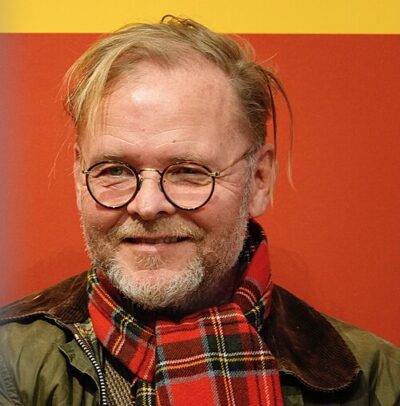
I'll be here in sunshine and in shadow
I'll be here in sunshine and in shadow is a 2008 novel by Christian Kracht. It won the Phantastik-Preis der Stadt Wetzlar.
- Published
- 2008
- Written by
- Christian Kracht
- Genre
- dystopian novel
- Country of origin
- Switzerland
All 8 facts, and where they come from
Facts
8 facts · 0 confirmed by two sources · 1 cited · 7 from one source
Where this comes from
Papalocal keeps its own record. It started from these sources; what each one said is kept here as it was copied, so a change on their side never changes this page by itself. Tap one to read its version.
What Wikidata says · copied November 17, 2026 · revision 2511358621
- Described as
- 2008 novel by Christian Kracht
- What it is
- literary work
- Written by
- Christian Kracht · 1 reference
- Genre
- dystopian novel · 1 reference
- Published
- 2008
- Language
- German
- Country of origin
- Switzerland
- Comes after
- 1979
- Awards
- Phantastik-Preis der Stadt Wetzlar (2009) · 1 reference
- Wikipedias with a page
- 3
Wikidata item Q1656333 (wikidata.org/wiki/Q1656333), public domain (CC0). Copied 2026-11-17.
What Wikipedia says · copied November 17, 2026 · revision 1384317671
Ich werde hier sein im Sonnenschein und im Schatten is a novel by Swiss writer Christian Kracht. It was published by Kiepenheuer & Witsch in September 2008. The title, translating to "I'll be here in sunshine and in shadow", is from the lyrics to the Irish folk song "Danny Boy".
The novel presents an alternate history of Switzerland in which Lenin did not leave Switzerland for Russia in 1917 to bring about the Russian Revolution. Instead, Lenin's revolution took place in Switzerland, transforming it into the Swiss Socialist Republic, a Communist state engaged in the colonisation of Africa and in perpetual war with other totalitarian empires, notably with a federation of British and German fascists. The plot of the novel, set in around 2010, traces a Swiss political commissar born in Nyasaland on a journey to the heart of the empire, the gigantic alpine Réduit, where he is to arrest Brazhinsky, an enemy of the state.
Ich werde hier sein's surreal setting and precise prose has garnered acclaim in the German-speaking literary world. Die Welt called it a "glorious horror story"; the Süddeutsche Zeitung praised the writing as not only deeply reminiscent of Ernst Jünger, but also as the "most beautiful German prose currently on offer" and Die Zeit hailed the work as "possibly the novel of the year". But the Frankfurter Rundschau 's reviewer discounted Ich werde hier sein as "simply moronic" and Die Tageszeitung found the text to be too diffuse and incoherent, amounting to just a "drug-clouded scenery".
The novel has been translated into Russian, Croatian, Swedish, Polish, Bulgarian, Korean, French, Norwegian, and Dutch.
From the Wikipedia article “Ich werde hier sein im Sonnenschein und im Schatten” (en.wikipedia.org/wiki/Ich_werde_hier_sein_im_Sonnenschein_und_im_Schatten), by its contributors, under CC BY-SA 4.0 (creativecommons.org/licenses/by-sa/4.0/). Copied 2026-11-17; not changed.
Confirmed Two sources agree. Cited One source, and it names where it got it. One source One source, without a reference of its own. Sources disagree The sources disagree. We show the best-supported value and keep theirs below.