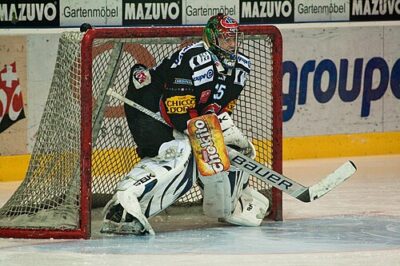
Iserlohn Roosters
Iserlohn Roosters is a German ice hockey team. It was founded in 1959. It plays in the Deutsche Eishockey Liga. Its home is Eissporthalle Iserlohn.
- Sport
- ice hockey
- League
- Deutsche Eishockey Liga
- Home venue
- Eissporthalle Iserlohn
- Founded
- 1959
All 7 facts, and where they come from
Facts
7 facts · 0 confirmed by two sources · 0 cited · 7 from one source
Where this comes from
Papalocal keeps its own record. It started from these sources; what each one said is kept here as it was copied, so a change on their side never changes this page by itself. Tap one to read its version.
What Wikidata says · copied November 19, 2026 · revision 2551893929
- Described as
- German ice hockey team
- What it is
- ice hockey team
- Founded
- 1959
- Country
- Germany
- Sport
- ice hockey
- League
- Deutsche Eishockey Liga
- Home venue
- Eissporthalle Iserlohn
- Official website
- http://www.iserlohn-roosters.de/
- Wikipedias with a page
- 19
Wikidata item Q498084 (wikidata.org/wiki/Q498084), public domain (CC0). Copied 2026-11-19.
What Wikipedia says · copied November 19, 2026 · revision 1352341038
The Iserlohn Roosters are a professional ice hockey team based in Iserlohn, North Rhine-Westphalia. They are members of the Deutsche Eishockey Liga (DEL) since 2000 and play their home games at the Balver-Zinn Arena which is also known as Eissporthalle am Seilersee. The team made the playoffs three times in its first 15 seasons in the DEL. The Roosters are widely regarded for their fans and having one of the best atmospheres at home games in Europe despite having an arena capacity for just 4,967 spectators. The club caused much controversy in 1987 when, under Heinz Weifenbach, a US$900,000 advertising deal was signed for former Libyan leader Muammar Gaddafi's The Green Book.
From the Wikipedia article “Iserlohn Roosters” (en.wikipedia.org/wiki/Iserlohn_Roosters), by its contributors, under CC BY-SA 4.0 (creativecommons.org/licenses/by-sa/4.0/). Copied 2026-11-19; not changed.
Confirmed Two sources agree. Cited One source, and it names where it got it. One source One source, without a reference of its own. Sources disagree The sources disagree. We show the best-supported value and keep theirs below.