İstiklâl Marşı
İstiklâl Marşı is a national anthem of Turkey and Northern Cyprus. It came out in 1921.
- Released
- 1921
All 6 facts, and where they come from
Facts
6 facts · 0 confirmed by two sources · 0 cited · 6 from one source
Where this comes from
Papalocal keeps its own record. It started from these sources; what each one said is kept here as it was copied, so a change on their side never changes this page by itself. Tap one to read its version.
What Wikidata says · copied November 17, 2026 · revision 2568420594
- Described as
- national anthem of Turkey and Northern Cyprus
- Other names
- Independence March of Turkey
- What it is
- national anthem
- Music by
- Osman Zeki Üngör
- Released
- 1921
- Language
- Turkish
- Country
- Turkey; Northern Cyprus
- Wikipedias with a page
- 81
Wikidata item Q344452 (wikidata.org/wiki/Q344452), public domain (CC0). Copied 2026-11-17.
What Wikipedia says · copied November 17, 2026 · revision 1382490657
"İstiklal Marşı" (Turkish: [isticˈlal maɾˈʃɯ]; lit. 'Independence March') is the national anthem of both the Republic of Turkey and the Turkish Republic of Northern Cyprus. It was officially adopted by the Grand National Assembly on 12 March 1921 – 2½ years before the 29 October 1923 establishment of the nation – both as a motivational musical saga for the troops fighting in the Turkish War of Independence, and as an aspirational anthem for a Republic that was yet to be established.
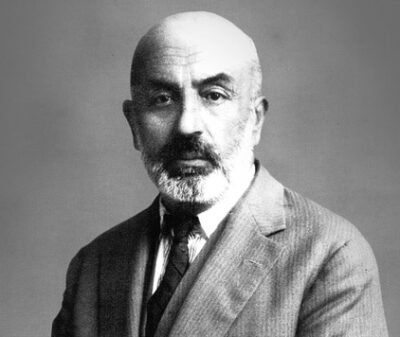
Penned by Mehmet Âkif Ersoy, and ultimately composed by Osman Zeki Üngör, the theme is one of affection for the Turkish homeland, freedom, and faith, as well as praise for the virtues of hope, devotion, and sacrifice in the pursuit of liberty, all explored through visual, tactile, and kinesthetic imagery as these concepts relate to the flag, the human spirit, and the soil of the homeland. The original manuscript by Ersoy carries the dedication Kahraman Ordumuza ('To Our Heroic Army'), in reference to the national forces that ultimately won the Turkish War of Independence, with lyrics that reflect on the sacrifices of the soldiers during the war.
It is regularly heard during state and military events, as well as during national festivals, bayrams, sporting events, and school ceremonies. Visual depictions can also be found adorning state or public displays, such as in the form of a scroll displaying the first two quatrains of the anthem on the reverse of the Turkish 100 lira banknotes of 1983–1989.
Of the ten-stanza anthem, only the first two quatrains are sung.
A framed version of the national anthem typically occupies the wall above the blackboard in the classrooms of Turkish schools, accompanied by a Turkish flag, a photograph of the country's founder Atatürk, and a copy of Atatürk's speech to the nation's youth from the concluding remarks to his 20 October 1927 address to the Parliament.
In 1983, the Turkish Republic of Northern Cyprus also adopted the Turkish national anthem under Article II of the Constitution of Northern Cyprus.
From the Wikipedia article “İstiklal Marşı” (en.wikipedia.org/wiki/İstiklal_Marşı), by its contributors, under CC BY-SA 4.0 (creativecommons.org/licenses/by-sa/4.0/). Copied 2026-11-17; not changed.
Confirmed Two sources agree. Cited One source, and it names where it got it. One source One source, without a reference of its own. Sources disagree The sources disagree. We show the best-supported value and keep theirs below.
Picture: Wikimedia Commons: İstiklâl Marşı (Cerîde-i Resmiye) matbu.png · See Commons file page