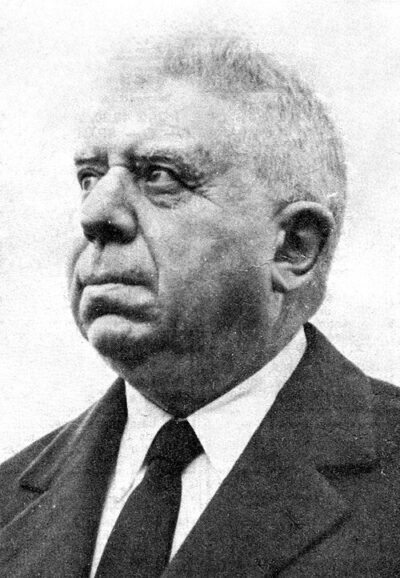
Italian Republican Party
The Italian Republican Party is an Italian political party. It was founded in 1895. Its headquarters are in Rome. It stands for republicanism, Mazzinianism and social liberalism.
- Country
- Italy
- Founded
- April 21, 1895
- Ideology
- republicanism
- Chair
- Francesco Nucara (2014–)
All 11 facts, and where they come from
Facts
11 facts · 0 confirmed by two sources · 0 cited · 11 from one source
Where this comes from
Papalocal keeps its own record. It started from these sources; what each one said is kept here as it was copied, so a change on their side never changes this page by itself. Tap one to read its version.
What Wikidata says · copied November 17, 2026 · revision 2550085783
- Described as
- Italian political party
- Other names
- Partito Repubblicano Italiano, PRI
- What it is
- political party
- Founded
- April 21, 1895
- Headquarters
- Rome
- Country
- Italy
- Chair
- Oronzo Reale (1965–1975); Ugo La Malfa (1975–1979)
- Ideology
- republicanism; Mazzinianism; social liberalism; pro-Europeanism
- Official website
- http://www.prinazionale.it/
- Wikipedias with a page
- 25
Wikidata item Q767560 (wikidata.org/wiki/Q767560), public domain (CC0). Copied 2026-11-17.
What Wikipedia says · copied November 17, 2026 · revision 1383737933
The Italian Republican Party (Italian: Partito Repubblicano Italiano, PRI) is a political party in Italy established in 1895, which makes it the oldest political party still active in the country. The PRI identifies with 19th-century classical radicalism, as well as Mazzinianism, and its modern incarnation is associated with liberalism, social liberalism, and centrism. The PRI has old roots and a long history that began with a left-wing position, being the heir of the Historical Far Left and claiming descent from the political thought of Giuseppe Mazzini and Giuseppe Garibaldi. Within the party there was also a more radical and socialist interpretation of Mazzini's doctrine, because "there were many who believed the teachings of the Genoese patriot could be compatible with the Marxist doctrine and... considered an alliance with the left-wing to be legitimate and desirable". With the rise of the Italian Communist Party and the Italian Socialist Party (PSI) to its left, it was associated with centre-left politics. The early PRI was also known for its anti-clerical, anti-monarchist, republican, and later anti-fascist stances While maintaining those traits, during the second half of the 20th century the party moved towards the centre on the left–right political spectrum, becoming increasingly economically liberal.
After 1949, the PRI was a member of the pro-NATO alliance formed by Christian Democracy (DC), the Italian Democratic Socialist Party, and the Italian Liberal Party (PLI), enabling it to participate in most governments of the 1950s, a period later known as Centrism. In 1963, the party helped bring together DC and PSI in Italy's first centre-left government, the Organic centre-left. Although small in terms of voter support, the PRI was influential thanks to leaders like Eugenio Chiesa, Giovanni Conti, Cipriano Facchinetti, Randolfo Pacciardi, Oronzo Reale, Ugo La Malfa, Bruno Visentini, Oddo Biasini and Giovanni Spadolini. The latter served as Prime Minister of Italy in 1981–1982, the first non Christian Democrat since 1945. From 1976 to 2010, the PRI was a member of the European Liberal Democrat and Reform Party (ELDR), along with the PLI, and the two parties usually ran together in European Parliament elections. After joining the centrist Segni Pact in 1994, the PRI was part of the centre-left coalition from 1996 to 2006, and then of the centre-right coalition from 2008 to 2013 (its leader Giorgio La Malfa was Minister for European Affairs from 2005 to 2006). Afterwards, it ran alone until joining the centrist Action – Italia Viva in 2022.
From the Wikipedia article “Italian Republican Party” (en.wikipedia.org/wiki/Italian_Republican_Party), by its contributors, under CC BY-SA 4.0 (creativecommons.org/licenses/by-sa/4.0/). Copied 2026-11-17; not changed.
Confirmed Two sources agree. Cited One source, and it names where it got it. One source One source, without a reference of its own. Sources disagree The sources disagree. We show the best-supported value and keep theirs below.