
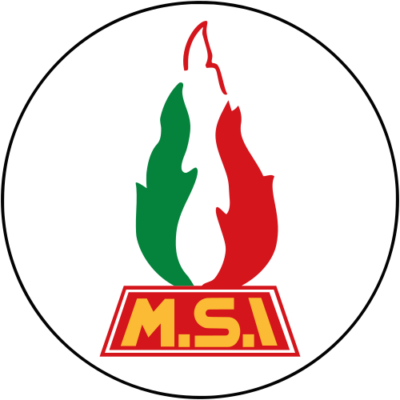
Italian Social Movement - National Right
Italian Social Movement - National Right is a neo-fascist and post-fascist political party in Italy. It was founded in 1946. Its headquarters are in Rome. It stands for Italian nationalism, neo-fascism and social conservatism.
- Country
- Italy
- Founded
- December 26, 1946
- Ideology
- Italian nationalism
- Chair
- Gianfranco Fini
All 15 facts, and where they come from
Facts
15 facts · 0 confirmed by two sources · 0 cited · 15 from one source
Where this comes from
Papalocal keeps its own record. It started from these sources; what each one said is kept here as it was copied, so a change on their side never changes this page by itself. Tap one to read its version.
What Wikidata says · copied November 17, 2026 · revision 2557633760
- Described as
- neo-fascist and post-fascist political party in Italy
- Other names
- MSI-DN, Italian Social Movement, MSI, Movimento Sociale Italiane
- What it is
- political party; social movement
- Comes after
- Republican Fascist Party
- Followed by
- National Alliance
- Founded
- December 26, 1946
- Ended
- January 27, 1995
- Headquarters
- Rome
- Located in
- Rome
- Country
- Italy
- Chair
- Gianfranco Fini; Giorgio Almirante · 1 reference
- Ideology
- Italian nationalism; neo-fascism; social conservatism; corporatism · 1 reference
- Wikipedias with a page
- 35
Wikidata item Q1126102 (wikidata.org/wiki/Q1126102), public domain (CC0). Copied 2026-11-17.
What Wikipedia says · copied November 17, 2026 · revision 1385874710
The Italian Social Movement (Italian: Movimento Sociale Italiano, MSI) was a neo-fascist political party in Italy. A far-right party, it presented itself until the 1990s as the defender of Italian fascism's legacy, and later moved towards national conservatism. In 1972, the Italian Democratic Party of Monarchist Unity was merged into the MSI and the party's official name was changed to Italian Social Movement – National Right (Italian: Movimento Sociale Italiano – Destra Nazionale, MSI–DN).
Formed in 1946 by supporters of the former dictator Benito Mussolini, most of whom were involved with the Italian Social Republic and the Republican Fascist Party, the MSI became the fourth largest party in Italy by the early 1960s. The party gave informal local and eventually national support to the Christian Democracy party from the late 1940s and through the 1950s, sharing anti-communism. In the early 1960s, the party was pushed to the sidelines of Italian politics, and only gradually started to gain some political recognition in the 1980s. There was internal competition between the party's moderate and radical factions. The radicals led the party in its formative years under Giorgio Almirante, while the moderates gained control in the 1950s and 1960s. Almirante's return as leader in 1969 was characterised by a big tent strategy.
In 1987, the reins of the party were taken by Gianfranco Fini, under whom it was transformed in 1995 into National Alliance (AN), a post-fascist party. On that occasion a small minority, led by Pino Rauti, disagreed with the new course and formed Social Movement Tricolour Flame (MSFT) instead. In 2009, AN merged with the then centre-right main party, The People of Freedom (PdL), while Brothers of Italy was founded in 2012 as a right-wing split of the PdL, and ten years later it became the largest party in the country.
From the Wikipedia article “Italian Social Movement” (en.wikipedia.org/wiki/Italian_Social_Movement), by its contributors, under CC BY-SA 4.0 (creativecommons.org/licenses/by-sa/4.0/). Copied 2026-11-17; not changed.
Confirmed Two sources agree. Cited One source, and it names where it got it. One source One source, without a reference of its own. Sources disagree The sources disagree. We show the best-supported value and keep theirs below.
Picture: Giorgio Almirante, via Wikimedia Commons · Public domain
People connected 9
Party members
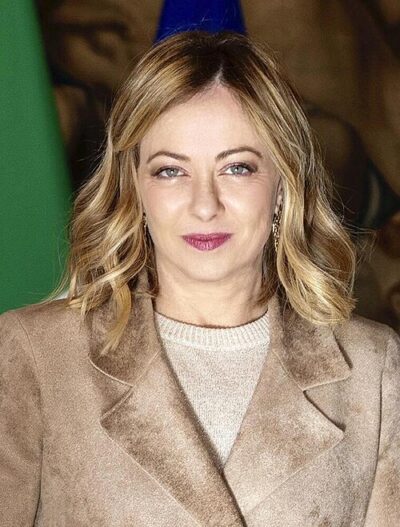 Giorgia Meloni (1992–1995)Prime Minister of Italy since 2022
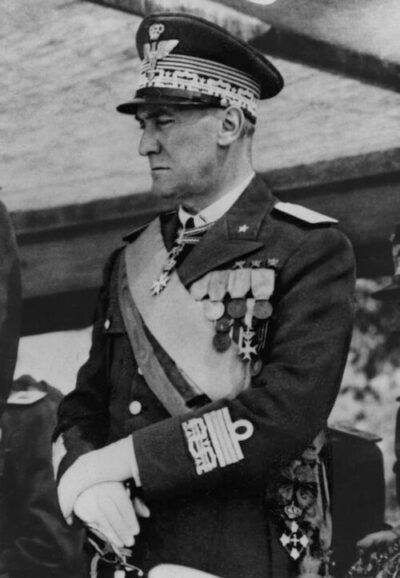 Rodolfo GrazianiItalian general (1882-1955)
 Alessandra Mussolini (1992–1995)Italian former politician, model and singer (born 1962)
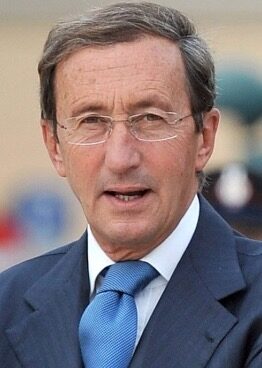 Gianfranco FiniItalian politician (born 1952)
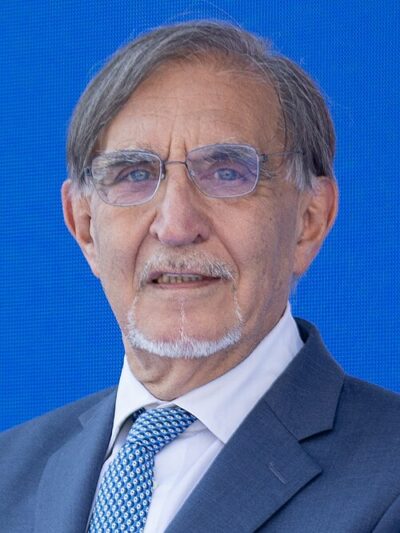 Ignazio Benito Maria La Russa (1971–1995)Italian politician (born 1947)
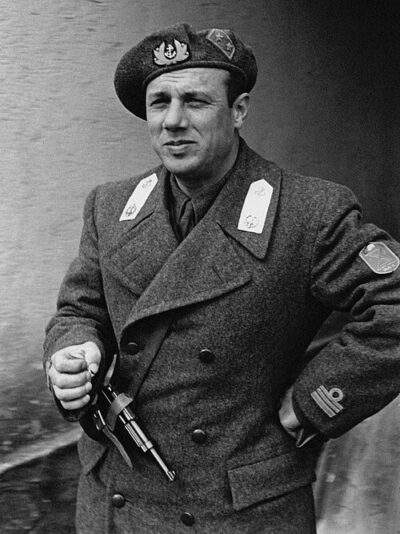 Junio Valerio BorgheseItalian submarine commander (1906-1974)
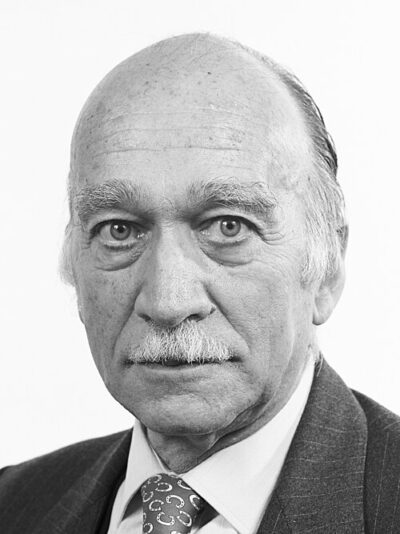 Giorgio AlmiranteItalian politician (1914–1988)
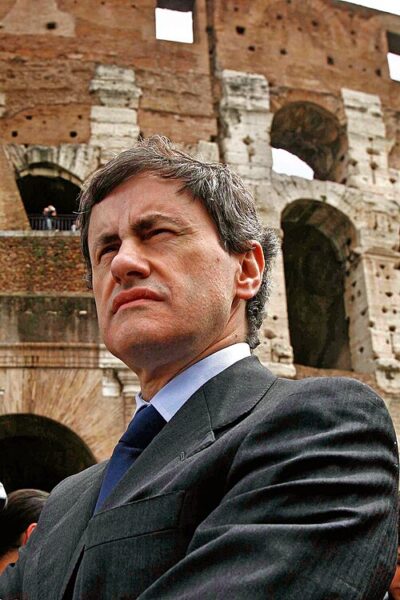 Gianni Alemanno (–1995)Italian politician
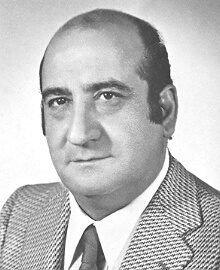 Umberto Chiacchio (1972–1995)politician
