Jacobi identity
Jacobi identity is a Property of some binary operations, such as the cross product and any ring's commutator.
All 2 facts, and where they come from
Facts
2 facts · 0 confirmed by two sources · 0 cited · 2 from one source
Where this comes from
Papalocal keeps its own record. It started from these sources; what each one said is kept here as it was copied, so a change on their side never changes this page by itself. Tap one to read its version.
What Wikidata says · copied November 17, 2026 · revision 2542200171
- Described as
- Property of some binary operations, such as the cross product and any ring's commutator
- What it is
- theorem
- Named after
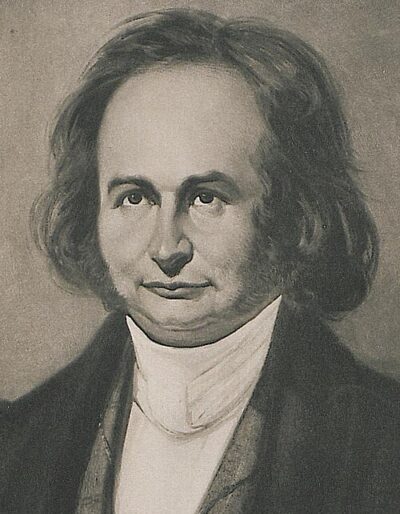
- Carl Gustav Jacob Jacobi
- Wikipedias with a page
- 18
Wikidata item Q1151539 (wikidata.org/wiki/Q1151539), public domain (CC0). Copied 2026-11-17.
What Wikipedia says · copied November 17, 2026 · revision 1383912270
In mathematics, the Jacobi identity is a property of some binary operations that describes how the order of evaluation, the placement of parentheses in a multiple product, affects the result of the operation. By contrast, for operations with the associative property, any order of evaluation gives the same result (parentheses in a multiple product are not needed). The identity is named after the German mathematician Carl Gustav Jacob Jacobi. He derived the Jacobi identity for Poisson brackets in his 1862 paper on differential equations.
The cross product a×b and the Lie bracket operation [a,b] both satisfy the Jacobi identity. In analytical mechanics, the Jacobi identity is satisfied by the Poisson brackets. In quantum mechanics, it is satisfied by operator commutators on a Hilbert space and equivalently in the phase space formulation of quantum mechanics by the Moyal bracket.
From the Wikipedia article “Jacobi identity” (en.wikipedia.org/wiki/Jacobi_identity), by its contributors, under CC BY-SA 4.0 (creativecommons.org/licenses/by-sa/4.0/). Copied 2026-11-17; not changed.
Confirmed Two sources agree. Cited One source, and it names where it got it. One source One source, without a reference of its own. Sources disagree The sources disagree. We show the best-supported value and keep theirs below.