Jammu and Kashmir People's Democratic Party
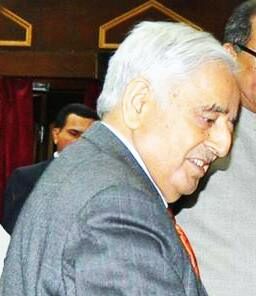
The Jammu and Kashmir People's Democratic Party is a Political party of India. It was founded in 1999 by Mufti Mohammad Sayeed.
- Country
- India
- Founded
- 1999
All 8 facts, and where they come from
Facts
8 facts · 0 confirmed by two sources · 0 cited · 8 from one source
Where this comes from
Papalocal keeps its own record. It started from these sources; what each one said is kept here as it was copied, so a change on their side never changes this page by itself. Tap one to read its version.
What Wikidata says · copied November 18, 2026 · revision 2447460757
- Described as
- Political party of India
- What it is
- political party
- Founded
- 1999
- Founded by
- Mufti Mohammad Sayeed
- Headquarters
- Jammu and Kashmir
- Country
- India
- Chair
- Mufti Mohammad Sayeed (1999–2016); Mehbooba Mufti (2016–)
- Official website
- http://www.jkpdp.org/
- Wikipedias with a page
- 16
Wikidata item Q3781724 (wikidata.org/wiki/Q3781724), public domain (CC0). Copied 2026-11-18.
What Wikipedia says · copied November 18, 2026 · revision 1384083207
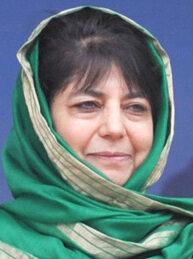
The Jammu and Kashmir Peoples Democratic Party (JKPDP) is a state political party in Jammu and Kashmir, India. The PDP was headed and founded by Mufti Mohammed Sayeed. His daughter, Mehbooba Mufti, succeeded him as party leader and as chief minister of Jammu and Kashmir following his death in January 2016. The party was a member of the People's Alliance for Gupkar Declaration electoral alliance.
Currently Mehbooba Mufti remains as the president of the party, with Waheed Para serving as the legislative party leader in the J&K Assembly, Fayaz Ahmad Mir as whip and Mirza Mehboob Beg as the Chief Spokesperson for the party.
From the Wikipedia article “Jammu and Kashmir Peoples Democratic Party” (en.wikipedia.org/wiki/Jammu_and_Kashmir_Peoples_Democratic_Party), by its contributors, under CC BY-SA 4.0 (creativecommons.org/licenses/by-sa/4.0/). Copied 2026-11-18; not changed.
Confirmed Two sources agree. Cited One source, and it names where it got it. One source One source, without a reference of its own. Sources disagree The sources disagree. We show the best-supported value and keep theirs below.