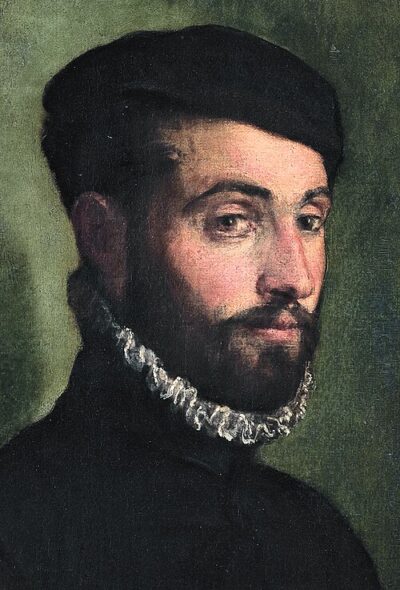
Jerusalem Delivered
Jerusalem Delivered is an epic poem by the Italian poet Torquato Tasso first published in 1581; tells a mythified account of the First Crusade in which Christian knights led by Godfrey of Bouillon battle to take Jerusalem. It came out in 1580.
- Published
- 1580
- Came out
- 1575
- Written by
- Torquato Tasso
- Genre
- epic poem
- Country of origin
- Italy
All 7 facts, and where they come from
Facts
7 facts · 0 confirmed by two sources · 2 cited · 5 from one source
Where this comes from
Papalocal keeps its own record. It started from these sources; what each one said is kept here as it was copied, so a change on their side never changes this page by itself. Tap one to read its version.
What Wikidata says · copied November 17, 2026 · revision 2530543587
- Described as
- epic poem by the Italian poet Torquato Tasso first published in 1581; tells a mythified account of the First Crusade in which Christian knights led by Godfrey of Bouillon battle to take Jerusalem
- Other names
- La Gerusalemme liberata, Jerusalem Liberated, The Liberation of Jerusalem
- What it is
- literary work
- Written by
- Torquato Tasso
- Genre
- epic poem
- Published
- 1580 · 1 reference
- Language
- Italian
- Country of origin
- Italy
- Came out
- 1575 · 1 reference
- Wikipedias with a page
- 38
Wikidata item Q1053313 (wikidata.org/wiki/Q1053313), public domain (CC0). Copied 2026-11-17.
What Wikipedia says · copied November 17, 2026 · revision 1383797691
Jerusalem Delivered, also known as The Liberation of Jerusalem (Italian: La Gerusalemme liberata [la dʒeruzaˈlɛmme libeˈraːta]; lit. 'The freed Jerusalem'), is an epic poem by the Italian poet Torquato Tasso, first published in 1581, that tells a largely mythified version of the First Crusade in which Christian knights, led by Godfrey of Bouillon, battle Muslims in order to take Jerusalem. Tasso began work on the poem in the mid-1560s. Originally, it bore the title Il Goffredo. It was completed in April 1575 and that summer the poet read his work to Duke Alfonso of Ferrara and Lucrezia, Duchess of Urbino. A pirate edition of 14 cantos from the poem appeared in Venice in 1580. The first complete editions of Gerusalemme liberata were published in Parma and Ferrara in 1581.
Tasso's choice of subject matter, an actual historic conflict between Christians and Muslims (albeit with fantastical elements added), had a historical grounding and created compositional implications (the narrative subject matter had a fixed endpoint and could not be endlessly spun out in multiple volumes) that are lacking in other Renaissance epics. Like other works of the period that portray conflicts between Christians and Muslims, this subject matter had a topical resonance to readers of the period when the Ottoman Empire was advancing through Eastern Europe.The poem was hugely successful, and sections or moments from the story were used in works in other media all over Europe, especially in the period before the French Revolution and the Romantic movement, which provided alternative stories combining love, violence, and an exotic setting. The poem is composed of 1,917 stanzas in ottava rima (15,336 hendecasyllabic lines), grouped into twenty cantos of varying length. The work belongs to the Italian Renaissance tradition of the romantic epic poem, and Tasso frequently borrows plot elements and character types directly from Ariosto's Orlando Furioso. Tasso's poem also has elements inspired by the classical epics of Homer and Virgil (especially in those sections of their works that tell of sieges and warfare). One of the most characteristic literary devices in Tasso's poem is the emotional conundrum endured by characters torn between their heart and their duty; the depiction of love at odds with martial valour or honor is a central source of lyrical passion in the poem.
From the Wikipedia article “Jerusalem Delivered” (en.wikipedia.org/wiki/Jerusalem_Delivered), by its contributors, under CC BY-SA 4.0 (creativecommons.org/licenses/by-sa/4.0/). Copied 2026-11-17; not changed.
Confirmed Two sources agree. Cited One source, and it names where it got it. One source One source, without a reference of its own. Sources disagree The sources disagree. We show the best-supported value and keep theirs below.
Picture: Wikimedia Commons: Agostino Carracci, Frontespizio della prima edizione illustrata della Gerusalemme Liberata, 1590.jpg · See Commons file page