
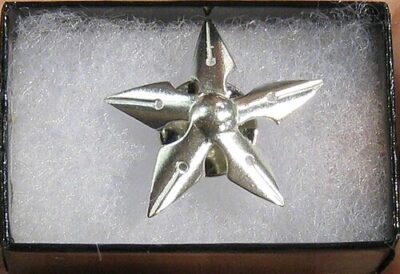
John W. Campbell Memorial Award for Best Science Fiction Novel
John W. Campbell Memorial Award for Best Science Fiction Novel is a science fiction literary award. It was created in 1973. It is given by Center for the Study of Science Fiction.
- Given by
- Center for the Study of Science Fiction
- Country
- United States
- Created
- 1973
All 6 facts, and where they come from
Facts
6 facts · 0 confirmed by two sources · 0 cited · 6 from one source
Where this comes from
Papalocal keeps its own record. It started from these sources; what each one said is kept here as it was copied, so a change on their side never changes this page by itself. Tap one to read its version.
What Wikidata says · copied November 16, 2026 · revision 2568553725
- Described as
- science fiction literary award
- What it is
- literary award; science fiction award
- Created
- 1973
- Country
- United States
- Given by
- Center for the Study of Science Fiction
- Named after
- John W. Campbell
- Wikipedias with a page
- 19
Wikidata item Q1030402 (wikidata.org/wiki/Q1030402), public domain (CC0). Copied 2026-11-16.
What Wikipedia says · copied November 16, 2026 · revision 1373913936
The John W. Campbell Memorial Award for Best Science Fiction Novel, or Campbell Memorial Award, was an annual award presented to the author of the best science fiction novel published in English in the preceding calendar year. It was given by several organizations from 1973 to 1979 and then by the Center for the Study of Science Fiction at the University of Kansas until 2019. It was the novel counterpart of the Theodore Sturgeon Award for best short story, awarded at the same conference by the Theodore Sturgeon Literary Trust. The award was named in honor of John W. Campbell (1910–1971), whose science fiction writing and role as editor of Analog Science Fiction and Fact made him one of the most influential editors in the early history of science fiction. The award was established in 1973 by writers and critics Harry Harrison and Brian Aldiss "as a way of continuing his efforts to encourage writers to produce their best possible work." Locus magazine listed it as one of the "major awards" of written science fiction.
The winning novel was selected by a panel of science fiction experts, intended to be "small enough to discuss among its members all of the nominated novels". Among members of the panel have been Gregory Benford, Paul A. Carter, James Gunn, Elizabeth Anne Hull, Christopher McKitterick, Farah Mendlesohn, Pamela Sargent, and Tom Shippey. In 2008 Mendlesohn was replaced with Paul Kincaid, in 2009 Carter left the panel while Paul Di Filippo and Sheila Finch joined, and Lisa Yaszek replaced Di Filippo in 2016. Nominations were submitted by publishers and jurors, and collated by the panel into a list of finalists to be voted on. The minimum eligible length that a work may be was not formally defined by the center. The winner was selected by May of each year, and was for a number of years presented during the Campbell Conference awards banquet in Lawrence as part of the centerpiece of the conference along with the Sturgeon Award. The award was given at this conference since 1979; prior to then it was awarded at various locations around the world, starting at the Illinois Institute of Technology in 1973. Winners were invited to attend the ceremony. James Gunn maintained a trophy which records all of the winners on engraved plaques affixed to the sides, and since 2004 winners received a smaller personalized trophy as well. In 2019, McKitterick, then the award's chair, announced plans to rename the conference and the award following the example of the Campbell Award for Best New Writer. Both the conference and the award were cancelled in 2020 and 2021 due to the COVID-19 pandemic and did not resume.
During the 47 years the award was active, 183 authors had works nominated; 47 of these authors won. In two years, 1976 and 1994, the panel selected none of the nominees as a winner, while in 1974, 2002, 2009, and 2012 the panel selected two winners rather than one. Frederik Pohl and Joan Slonczewski each won twice, the only authors to do so, out of four and two nominations, respectively. Kim Stanley Robinson and Paul J. McAuley won once out of seven nominations, and Jack McDevitt, Ian McDonald, Adam Roberts, and Robert J. Sawyer won once out of five nominations, while Nancy Kress, Bruce Sterling, and Robert Charles Wilson won once out of four nominations. Greg Bear had the most nominations without winning at nine, followed by Sheri S. Tepper at six, James K. Morrow at five, and William Gibson, Ken MacLeod, Charles Stross, and Peter Watts at four.
From the Wikipedia article “John W. Campbell Memorial Award for Best Science Fiction Novel” (en.wikipedia.org/wiki/John_W._Campbell_Memorial_Award_for_Best_Science_Fiction_Novel), by its contributors, under CC BY-SA 4.0 (creativecommons.org/licenses/by-sa/4.0/). Copied 2026-11-16; not changed.
Confirmed Two sources agree. Cited One source, and it names where it got it. One source One source, without a reference of its own. Sources disagree The sources disagree. We show the best-supported value and keep theirs below.
Picture: Patrick Nielsen Hayden, via Wikimedia Commons · CC BY-SA 2.0
People connected 34
Won it 34
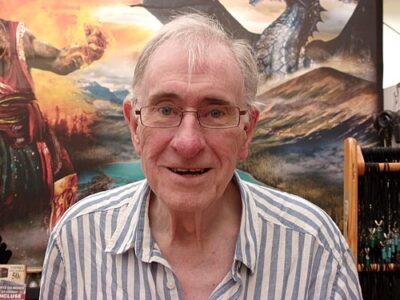 Christopher Priest (2012)British author (1943–2024)
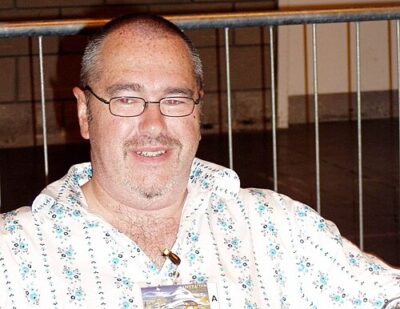 Ian McDonald (2011)British science fiction novelist (1960–)
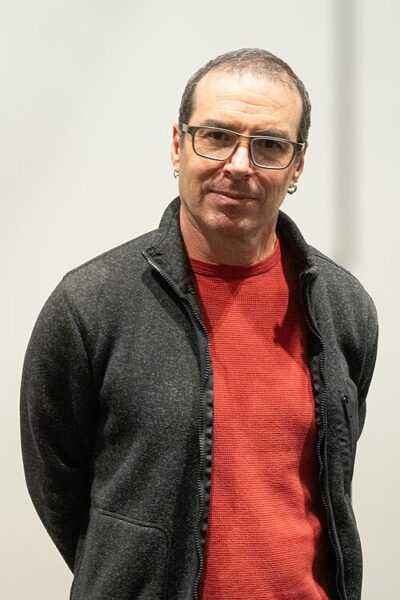 Paolo Bacigalupi (2010)American science fiction and fantasy writer
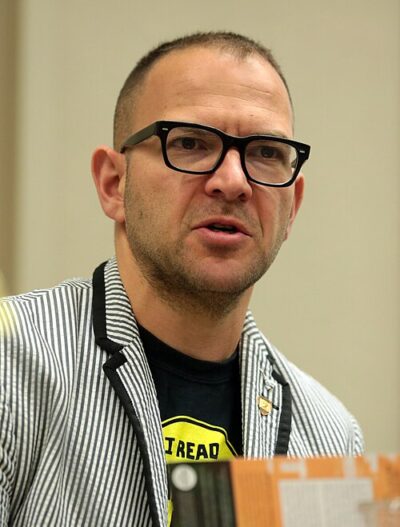 Cory Doctorow (2009)Canadian-British-American blogger, journalist, and science fiction author
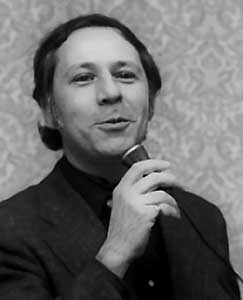 Ben Bova (2007)American writer (1932–2020)
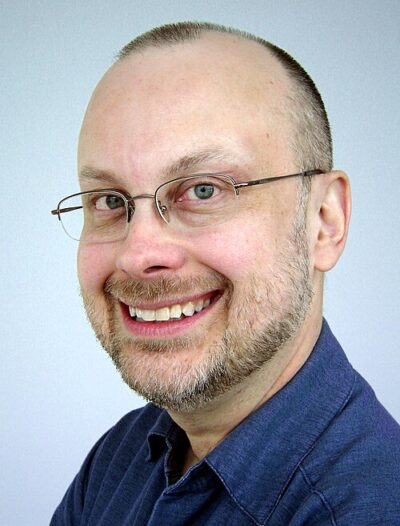 Robert J. Sawyer (2006)Canadian science fiction writer (born 1960)
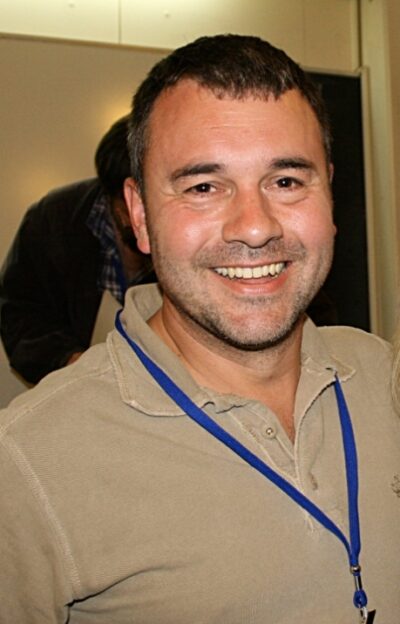 Richard K. Morgan (2005)British science fiction writer & novelist
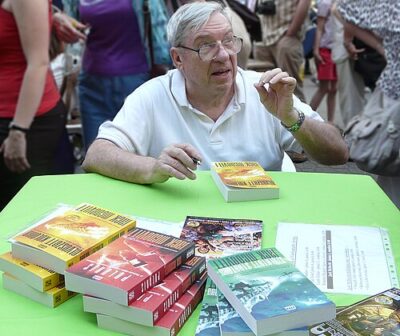 Jack McDevitt (2004)American science fiction author (born 1935)
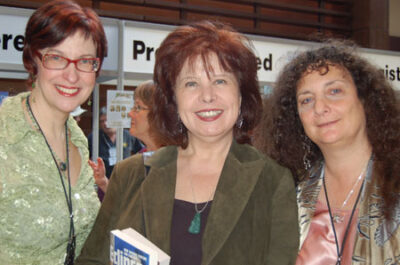 Nancy Kress (2003)American science fiction writer (1948-)
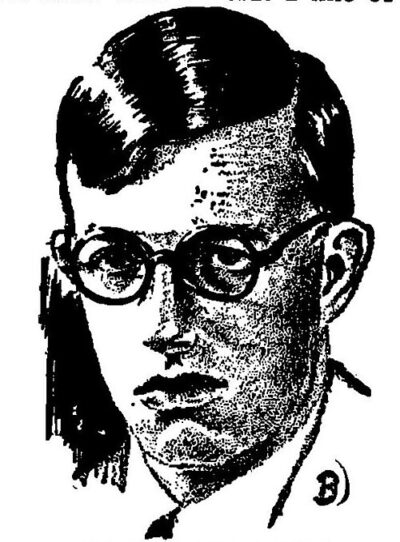 Jack Williamson (2002)American science fiction writer (1908–2006)
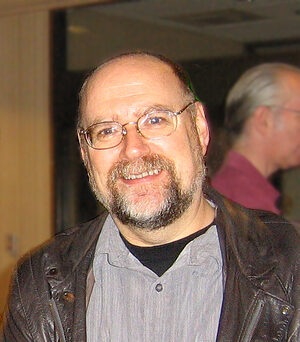 Robert Charles Wilson (2002)American-Canadian science fiction author (b. 1953)
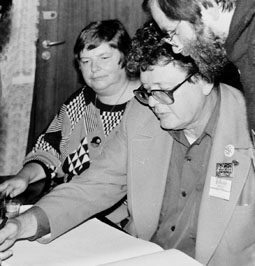 Poul Anderson (2001)American science fiction writer (1926–2001)
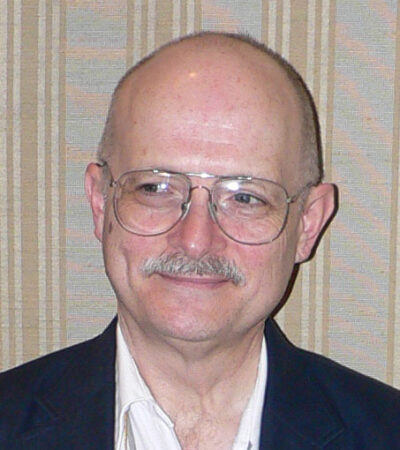 Vernor Vinge (2000)American mathematician, computer scientist, and science fiction writer (1944–2024)
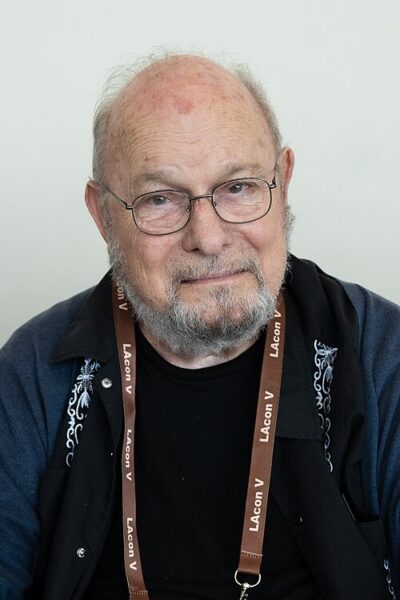 Joe Haldeman (1998)American science fiction writer
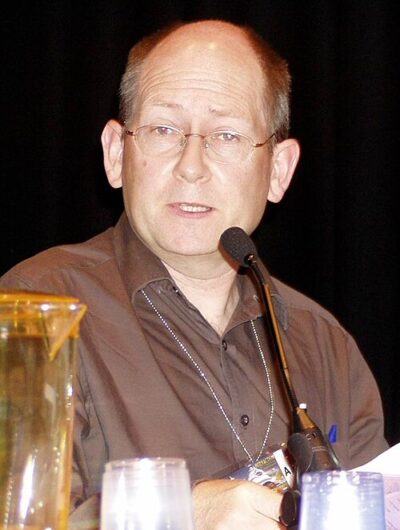 Stephen Baxter (1996)British writer
- GGreg Egan (1995)Australian science fiction writer and former computer programmer
- CCharles Sheffield (1993)British mathematician, physicist and writer (1935–2002)
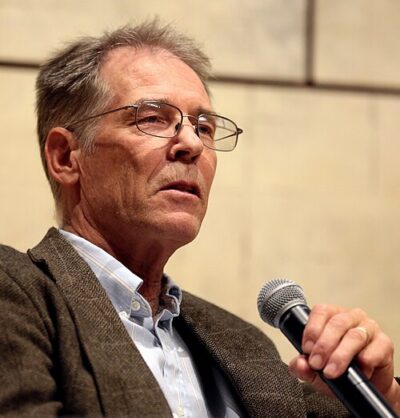 Kim Stanley Robinson (1991)American science fiction writer (born 1952)
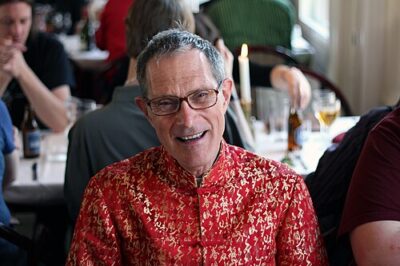 Geoff Ryman (1990)British-Canadian writer
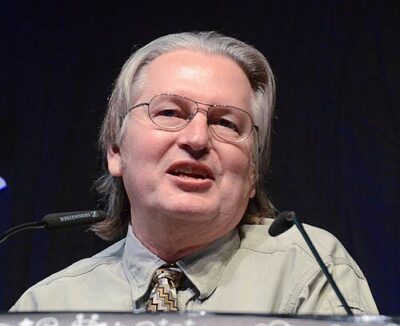 Bruce Sterling (1989)American author, speaker and futurist (born 1954)
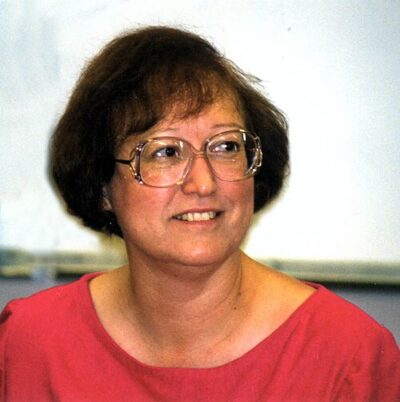 Connie Willis (1988)American science fiction writer
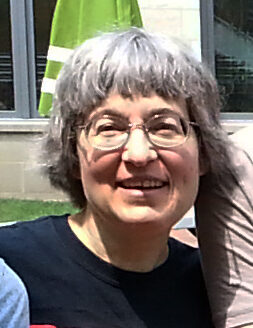 Joan Slonczewski (1987)American microbiologist and writer
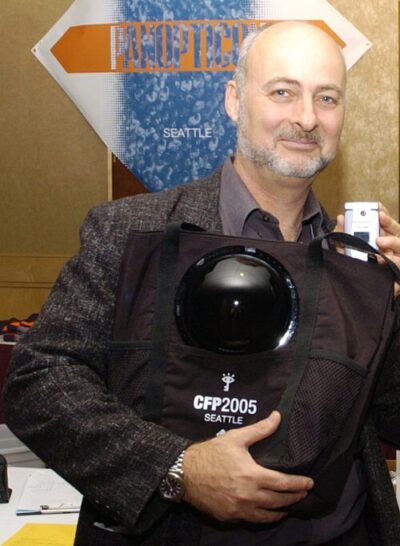 David Brin (1986)American scientist and science fiction author (born 1950)
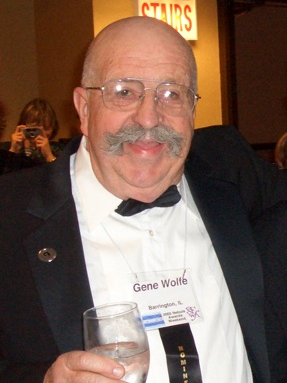 Gene Wolfe (1984)American science fiction and fantasy writer (1931–2019)
and 10 more
