Jordan curve theorem
Jordan curve theorem is a theorem stating that a closed curve divides the plane into two regions.
All 2 facts, and where they come from
Facts
2 facts · 0 confirmed by two sources · 0 cited · 2 from one source
Where this comes from
Papalocal keeps its own record. It started from these sources; what each one said is kept here as it was copied, so a change on their side never changes this page by itself. Tap one to read its version.
What Wikidata says · copied November 17, 2026 · revision 2506996411
- Described as
- theorem stating that a closed curve divides the plane into two regions
- Other names
- plane simple closed curve theorem
- What it is
- theorem
- Named after
- Camille Jordan
- Wikipedias with a page
- 25
Wikidata item Q260928 (wikidata.org/wiki/Q260928), public domain (CC0). Copied 2026-11-17.
What Wikipedia says · copied November 17, 2026 · revision 1382135639
In topology, a discipline within mathematics, the Jordan curve theorem (JCT), formulated by Camille Jordan in 1887, asserts that every simple closed curve in the plane (known as a Jordan curve) divides the plane into two regions: the interior, bounded by the curve, and an unbounded exterior, containing all of the nearby and faraway exterior points. Every continuous path connecting a point of one region to a point of the other must intersect the curve somewhere.
While the theorem seems intuitively obvious, it takes some ingenuity to prove it by elementary means. "Although the JCT is one of the best known topological theorems, there are many, even among professional mathematicians, who have never read a proof of it." (Tverberg (1980, Introduction)). More transparent proofs rely on the mathematical machinery of algebraic topology, and these lead to generalizations to higher-dimensional spaces.
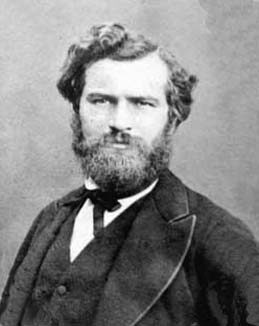
The Jordan curve theorem is named after the Camille Jordan, who published its first claimed proof in 1887. For decades, mathematicians generally thought that this proof was flawed and that the first rigorous proof was carried out by Oswald Veblen; however, this notion has been overturned by Thomas C. Hales and others.
From the Wikipedia article “Jordan curve theorem” (en.wikipedia.org/wiki/Jordan_curve_theorem), by its contributors, under CC BY-SA 4.0 (creativecommons.org/licenses/by-sa/4.0/). Copied 2026-11-17; not changed.
Confirmed Two sources agree. Cited One source, and it names where it got it. One source One source, without a reference of its own. Sources disagree The sources disagree. We show the best-supported value and keep theirs below.