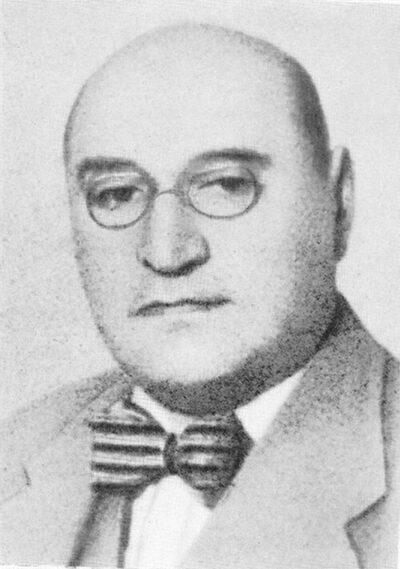
Judenrat of Warsaw
Judenrat of Warsaw is a Judenrat established in 1939 in Warsaw.
- Founded
- October 6, 1939
- Headquarters
- Warsaw
- Country
- General Government
All 7 facts, and where they come from
Facts
7 facts · 0 confirmed by two sources · 0 cited · 7 from one source
Where this comes from
Papalocal keeps its own record. It started from these sources; what each one said is kept here as it was copied, so a change on their side never changes this page by itself. Tap one to read its version.
What Wikidata says · copied November 18, 2026 · revision 2449092662
- Described as
- Judenrat established in 1939 in Warsaw
- Other names
- Warsaw Judenrat, Judenrat in Warschau, Jewish Council in Warsaw, Judenrat of the Warsaw ghetto, Warsaw ghetto Judenrat
- What it is
- Judenrat
- Founded
- October 6, 1939
- Ended
- April 1943
- Headquarters
- Warsaw
- Country
- General Government
- Chair
- Adam Czerniaków (1939–1942); Marek Lichtenbaum (1942–1943)
- Wikipedias with a page
- 2
Wikidata item Q134281078 (wikidata.org/wiki/Q134281078), public domain (CC0). Copied 2026-11-18.
What Wikipedia says · copied November 18, 2026 · revision 1371768213
The Judenrat in Warsaw, also known as the Jewish Council in Warsaw (German: Judenrat in Warschau; Yiddish: יודענראַט אין וואַרשע or יוד-ראַט אין וואַרשע) was a Judenrat established by the German occupation authorities in October 1939. It was tasked with implementing German directives affecting the Jewish population in Warsaw.
From autumn 1940, following the establishment of the Warsaw Ghetto, the Judenrat assumed responsibility for the ghetto's internal administration. The council was chaired by Adam Czerniaków until his suicide on 23 July 1942, after which Marek Lichtenbaum succeeded him.
The Judenrat operated under strict German supervision and within severe constraints. Initially subordinate to German police authorities, it later fell under civilian administration, represented among others by Heinz Auerswald, who was appointed Commissioner for the Jewish Residential District in May 1941. The council faced intense criticism from Jewish resistance movement, social self-help organizations, and much of the ghetto population. It was accused of corruption, nepotism, incompetence, favoritism toward wealthier residents, promoting assimilationist tendencies, and excessive subservience – or even collaboration – with the occupying authorities. Such criticisms, however, often did not fully account for the extreme conditions and highly limited options available to the Judenrat.
With the commencement of Grossaktion Warsaw in summer 1942, the Judenrat's role and influence diminished significantly. It ceased to function during the suppression of the Warsaw Ghetto Uprising. None of its members survived the war.
From the Wikipedia article “Judenrat in Warsaw” (en.wikipedia.org/wiki/Judenrat_in_Warsaw), by its contributors, under CC BY-SA 4.0 (creativecommons.org/licenses/by-sa/4.0/). Copied 2026-11-18; not changed.
Confirmed Two sources agree. Cited One source, and it names where it got it. One source One source, without a reference of its own. Sources disagree The sources disagree. We show the best-supported value and keep theirs below.