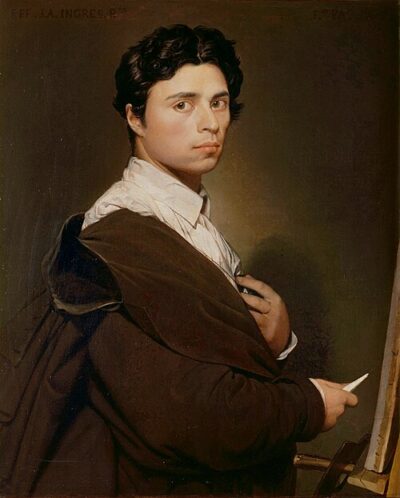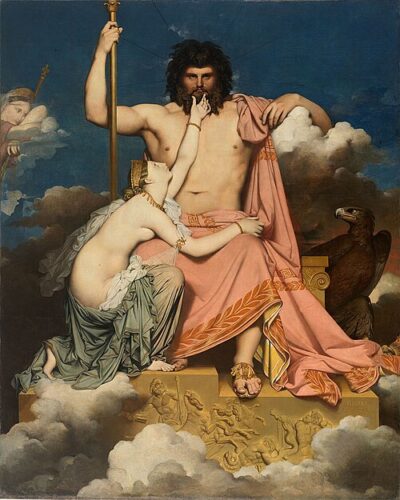
Jupiter and Thetis
Jupiter and Thetis is a painting by Jean Auguste Dominique Ingres. It came out in 1811. It was created by Jean-Auguste-Dominique Ingres. It is based on Greek mythology.
- Came out
- 1811
- Created by
- Jean-Auguste-Dominique Ingres
- Genre
- mythological painting
All 7 facts, and where they come from
Facts
7 facts · 0 confirmed by two sources · 0 cited · 7 from one source
Where this comes from
Papalocal keeps its own record. It started from these sources; what each one said is kept here as it was copied, so a change on their side never changes this page by itself. Tap one to read its version.
What Wikidata says · copied November 17, 2026 · revision 2523043327
- Described as
- painting by Jean Auguste Dominique Ingres
- What it is
- painting
- Created by
- Jean-Auguste-Dominique Ingres
- Genre
- mythological painting; nude
- Based on
- Greek mythology
- Came out
- 1811
- Country
- France
- Wikipedias with a page
- 13
Wikidata item Q941416 (wikidata.org/wiki/Q941416), public domain (CC0). Copied 2026-11-17.
What Wikipedia says · copied November 17, 2026 · revision 1354359298
Jupiter and Thetis is an 1811 painting by the French neoclassical painter Jean-Auguste-Dominique Ingres, in the Musée Granet, Aix-en-Provence, France. Painted when the artist was not yet 31, the work severely and pointedly contrasts the grandeur and might of a cloud-borne Olympian male deity against that of a diminutive and half nude nymph. Ingres' subject matter is borrowed from an episode in Homer's Iliad when the sea nymph Thetis begs Jupiter to intervene and guide the fate of her son Achilles, who was at the time embroiled in the Trojan War.
From the Wikipedia article “Jupiter and Thetis” (en.wikipedia.org/wiki/Jupiter_and_Thetis), by its contributors, under CC BY-SA 4.0 (creativecommons.org/licenses/by-sa/4.0/). Copied 2026-11-17; not changed.
Confirmed Two sources agree. Cited One source, and it names where it got it. One source One source, without a reference of its own. Sources disagree The sources disagree. We show the best-supported value and keep theirs below.
Picture: Jean-Auguste-Dominique Ingres, via Wikimedia Commons · Public domain