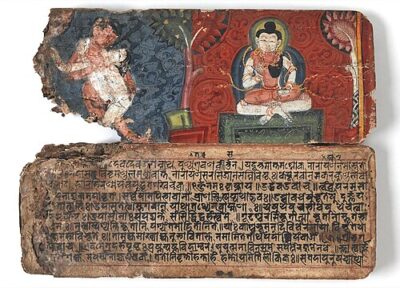
Kama Sutra
Kama Sutra is an ancient Hindu text on erotic love. It was written by Vātsyāyana.
- Written by
- Vātsyāyana
- Genre
- sutra
- Country of origin
- Gupta Empire
All 5 facts, and where they come from
Facts
5 facts · 0 confirmed by two sources · 0 cited · 5 from one source
Where this comes from
Papalocal keeps its own record. It started from these sources; what each one said is kept here as it was copied, so a change on their side never changes this page by itself. Tap one to read its version.
What Wikidata says · copied November 17, 2026 · revision 2563475870
- Described as
- ancient Hindu text on erotic love
- Other names
- Kamasutra, Vatsyayana Kamasutra, Kamasastra, Kamsutra
- What it is
- literary work
- Written by
- Vātsyāyana
- Genre
- sutra
- Language
- Sanskrit · 1 reference
- Country of origin
- Gupta Empire · 1 reference
- Wikipedias with a page
- 101
Wikidata item Q47228 (wikidata.org/wiki/Q47228), public domain (CC0). Copied 2026-11-17.
What Wikipedia says · copied November 17, 2026 · revision 1384221269
The Kama Sutra, in English also spelled Kamasutra (; Sanskrit: कामसूत्र, , Kāma-sūtra; lit. 'Principles of Love'), is an ancient Sanskrit text on sexuality, eroticism, and emotional fulfillment. Attributed to Vātsyāyana, the Kamasutra is neither exclusively nor predominantly a sex manual on sex positions, but rather a guide on the art of living well, the nature of love, finding partners, maintaining sex life, and other aspects pertaining to pleasure-oriented faculties. It is a sutra-genre text with terse aphoristic verses that have survived into the modern era with different bhāṣyas (commentaries). The text is a mix of prose and anustubh-meter poetry verses.
The Kamasutra acknowledges the Hindu concept of purusharthas, and lists desire, sexuality, and emotional fulfillment as one of the proper goals of life. It discusses methods for courtship, training in the arts to be socially engaging, finding a partner, flirting, maintaining power in a married life, when and how to commit adultery, sexual positions, and other topics. The text majorly deals with the philosophy and theory of love, what triggers desire, what sustains it, and how and when it is good or bad.
The text is one of many Indian texts on Kama Shastra. It is a much-translated work in Indian and non-Indian languages, and has influenced many secondary texts that followed since the 4th century CE, as well as the Indian arts as exemplified by the pervasive presence of Kama-related reliefs and sculpture in old Hindu temples. Of these, the Khajuraho in Madhya Pradesh is a UNESCO World Heritage Site. Among the surviving temples, one in Rajasthan has all the major chapters and sexual positions sculpted to illustrate the Kamasutra.
According to Wendy Doniger, the Kamasutra became "one of the most pirated books in English language" soon after it was published in 1883 by Richard Burton. This first European edition by Burton does not faithfully reflect much in the Kamasutra because he revised the collaborative translation by Bhagavanlal Indrajit and Shivaram Parashuram Bhide with Forster Arbuthnot to suit 19th-century Victorian tastes.
From the Wikipedia article “Kama Sutra” (en.wikipedia.org/wiki/Kama_Sutra), by its contributors, under CC BY-SA 4.0 (creativecommons.org/licenses/by-sa/4.0/). Copied 2026-11-17; not changed.
Confirmed Two sources agree. Cited One source, and it names where it got it. One source One source, without a reference of its own. Sources disagree The sources disagree. We show the best-supported value and keep theirs below.
Picture: Wikimedia Commons: 3rd or 4th century CE Kamasutra, Vatsyayana, 13th-century Jayamangala commentary of Yashodhara, Bendall purchase 1885CE in Nepal, Sanskrit, Devanagari.jpg · See Commons file page