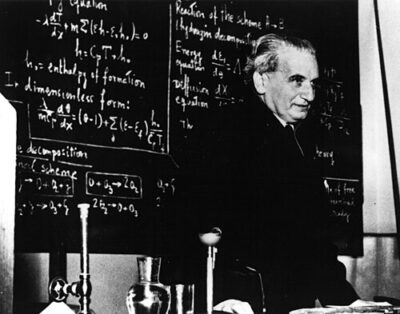
Kármán line
Kármán line is a popular defined boundary of outer space.
All 3 facts, and where they come from
Facts
3 facts · 0 confirmed by two sources · 0 cited · 3 from one source
Where this comes from
Papalocal keeps its own record. It started from these sources; what each one said is kept here as it was copied, so a change on their side never changes this page by itself. Tap one to read its version.
What Wikidata says · copied November 16, 2026 · revision 2553935643
- Described as
- popular defined boundary of outer space
- Other names
- Karman line
- What it is
- geographical boundary; rule
- Named after
- Theodore von Kármán
- Wikipedias with a page
- 61
Wikidata item Q275565 (wikidata.org/wiki/Q275565), public domain (CC0). Copied 2026-11-16.
What Wikipedia says · copied November 16, 2026 · revision 1384560847
The Kármán line (or von Kármán line ) is a conventional definition of the edge of space; it is widely but not universally accepted. The international record-keeping body FAI (Fédération aéronautique internationale) defines the Kármán line at an altitude of 100 kilometres (54 nautical miles; 62 miles; 328,084 feet) above mean sea level.
While named after Theodore von Kármán, who calculated a theoretical limit of altitude for aeroplane flight at 83.8 km (52.1 mi) above Earth, the later-established Kármán line is more general and has no distinct physical significance, in that there is a rather gradual difference between the characteristics of the atmosphere at the line, and experts disagree on defining a distinct boundary where the atmosphere ends and space begins. It lies well above the altitude reachable by conventional airplanes or high-altitude balloons, and it is approximately where satellites, even on very eccentric trajectories, will decay before completing a single orbit.
The Kármán line is mainly used for legal and regulatory purposes of differentiating between aircraft and spacecraft, which are then subject to different jurisdictions and legislations. While international law does not define the edge of space, or the limit of national airspace, most international organizations and regulatory agencies (including the United Nations) accept the FAI's Kármán line definition or something close to it. As defined by the FAI, the Kármán line was established in the 1960s. Various countries and entities define space's boundary differently for various purposes.
From the Wikipedia article “Kármán line” (en.wikipedia.org/wiki/Kármán_line), by its contributors, under CC BY-SA 4.0 (creativecommons.org/licenses/by-sa/4.0/). Copied 2026-11-16; not changed.
Confirmed Two sources agree. Cited One source, and it names where it got it. One source One source, without a reference of its own. Sources disagree The sources disagree. We show the best-supported value and keep theirs below.
Picture: Wikimedia Commons: Top of Atmosphere.jpg · See Commons file page