khedive
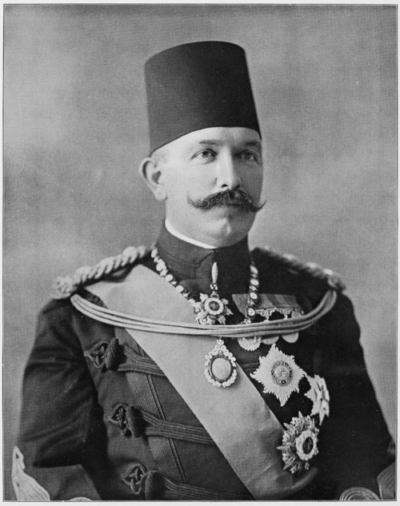
Khedive is a noble title of Egypt's ruler.
- Country
- Ottoman Empire
All 3 facts, and where they come from
Facts
3 facts · 0 confirmed by two sources · 2 cited · 1 from one source
Where this comes from
Papalocal keeps its own record. It started from these sources; what each one said is kept here as it was copied, so a change on their side never changes this page by itself. Tap one to read its version.
What Wikidata says · copied November 16, 2026 · revision 2548328777
- Described as
- noble title of Egypt's ruler
- Other names
- Hıdiv
- What it is
- noble title; historical position · 1 reference
- Country
- Ottoman Empire · 1 reference
- Wikipedias with a page
- 47
Wikidata item Q127878 (wikidata.org/wiki/Q127878), public domain (CC0). Copied 2026-11-16.
What Wikipedia says · copied November 16, 2026 · revision 1381234800
Khedive ( kə-DEEV; Ottoman Turkish: خدیو, romanized: hidiv; Arabic: خديوي, romanized: khudaywī) was an honorific title of Classical Persian origin used for the sultans and grand viziers of the Ottoman Empire, but most famously for the viceroy of Egypt from 1805 to 1914.
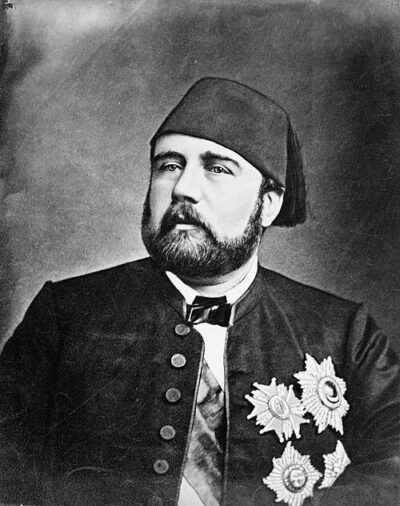
It is attested in Persian poetry from the 10th century and was used as an Ottoman honorific from the 16th. It was borrowed into Ottoman Turkish directly from Persian. It was first used in Egypt, without official recognition, by Muhammad Ali Pasha, the ethnically Albanian governor of Ottoman Egypt and Turco-Egyptian Sudan from 1805 to 1848. The initially self-declared title was officially recognized by the Ottoman government in 1867 and used subsequently by Isma'il Pasha of Egypt and his dynastic successors until 1914. The term entered Arabic in Egypt in the 1850s.
From the Wikipedia article “Khedive” (en.wikipedia.org/wiki/Khedive), by its contributors, under CC BY-SA 4.0 (creativecommons.org/licenses/by-sa/4.0/). Copied 2026-11-16; not changed.
Confirmed Two sources agree. Cited One source, and it names where it got it. One source One source, without a reference of its own. Sources disagree The sources disagree. We show the best-supported value and keep theirs below.
Picture: Wikimedia Commons: Abbas Hilmi II.JPG · See Commons file page