Kleene star
Kleene star is an unary operation on sets of strings, used in regular expressions for "zero or more repetitions".
All 4 facts, and where they come from
Facts
4 facts · 0 confirmed by two sources · 0 cited · 4 from one source
Where this comes from
Papalocal keeps its own record. It started from these sources; what each one said is kept here as it was copied, so a change on their side never changes this page by itself. Tap one to read its version.
What Wikidata says · copied November 17, 2026 · revision 2541102460
- Described as
- unary operation on sets of strings, used in regular expressions for "zero or more repetitions"
- Other names
- Kleene closure, Kleene operator, zero or more, Kleene star operator, 0 or more
- What it is
- unary operation; idempotent function; mathematical concept
- Named after
- Stephen Cole Kleene
- Wikipedias with a page
- 29
Wikidata item Q849775 (wikidata.org/wiki/Q849775), public domain (CC0). Copied 2026-11-17.
What Wikipedia says · copied November 17, 2026 · revision 1381292995
In formal language theory, the Kleene star (or Kleene operator or Kleene closure) refers to two related unary operations, that can be applied either to an alphabet of symbols or to a formal language, a set of strings (finite sequences of symbols).
The Kleene star operator on an alphabet V generates the set V* of all finite-length strings over V, that is, finite sequences whose elements belong to V; in mathematics, it is more commonly known as the free monoid construction. The Kleene star operator on a language L generates another language L*, the set of all strings that can be obtained as a concatenation of zero or more members of L. In both cases, repetitions are allowed.
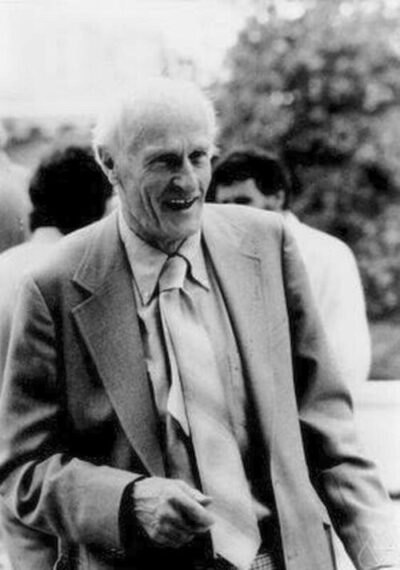
The Kleene star operators are named after American mathematician Stephen Cole Kleene, who first introduced and widely used it to characterize automata for regular expressions.
From the Wikipedia article “Kleene star” (en.wikipedia.org/wiki/Kleene_star), by its contributors, under CC BY-SA 4.0 (creativecommons.org/licenses/by-sa/4.0/). Copied 2026-11-17; not changed.
Confirmed Two sources agree. Cited One source, and it names where it got it. One source One source, without a reference of its own. Sources disagree The sources disagree. We show the best-supported value and keep theirs below.