knot theory
Knot theory is a study of mathematical knots.
All 3 facts, and where they come from
Facts
3 facts · 0 confirmed by two sources · 0 cited · 3 from one source
Where this comes from
Papalocal keeps its own record. It started from these sources; what each one said is kept here as it was copied, so a change on their side never changes this page by itself. Tap one to read its version.
What Wikidata says · copied November 17, 2026 · revision 2541102403
- Described as
- study of mathematical knots
- What it is
- academic discipline; branch of mathematics; mathematical theory
- Wikipedias with a page
- 40
Wikidata item Q849798 (wikidata.org/wiki/Q849798), public domain (CC0). Copied 2026-11-17.
What Wikipedia says · copied November 17, 2026 · revision 1386225554
In topology, knot theory is the study of mathematical knots. While inspired by knots which appear in daily life, such as those in shoelaces and rope, a mathematical knot differs in that the ends are joined so it cannot be undone, the simplest knot being a ring (or "unknot"). In mathematical language, a knot is an embedding of a circle in 3-dimensional Euclidean space, 𝔼3. Two mathematical knots are equivalent if one can be transformed into the other via a deformation of ℝ3 upon itself (known as an ambient isotopy); these transformations correspond to manipulations of a knotted string that do not involve cutting it or passing it through itself.
Knots can be described in various ways. Using different description methods, there may be more than one description of the same knot. For example, a common method of describing a knot is a planar diagram called a knot diagram, in which any knot can be drawn in many different ways. Therefore, a fundamental problem in knot theory is determining when two descriptions represent the same knot.
A complete algorithmic solution to this problem exists, which has unknown complexity. In practice, knots are often distinguished using a knot invariant, a "quantity" which is the same when computed from different descriptions of a knot. Important invariants include knot polynomials, knot groups, and hyperbolic invariants.
The original motivation for the founders of knot theory was to create a table of knots and links, which are knots of several components entangled with each other. More than six billion knots and links have been tabulated since the beginnings of knot theory in the 19th century.
To gain further insight, mathematicians have generalized the knot concept in several ways. Knots can be considered in other three-dimensional spaces and objects other than circles can be used; see knot (mathematics). For example, a higher-dimensional knot is an n-dimensional sphere embedded in (n+2)-dimensional Euclidean space. Knot theory can also be extended to describe entanglement in open curves, which is used to study knots in proteins, DNA, and physical ropes.
From the Wikipedia article “Knot theory” (en.wikipedia.org/wiki/Knot_theory), by its contributors, under CC BY-SA 4.0 (creativecommons.org/licenses/by-sa/4.0/). Copied 2026-11-17; not changed.
Confirmed Two sources agree. Cited One source, and it names where it got it. One source One source, without a reference of its own. Sources disagree The sources disagree. We show the best-supported value and keep theirs below.
Picture: Wikimedia Commons: Gwegwefewc.tif · See Commons file page
People connected 4
Field
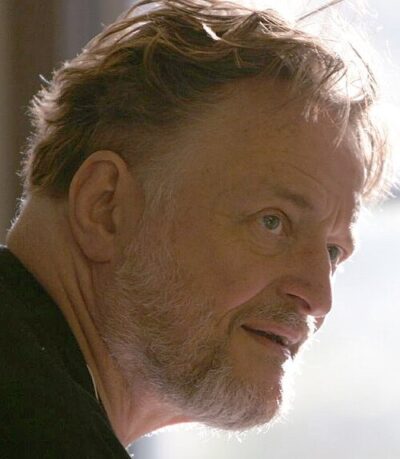 John Horton ConwayEnglish mathematician (1937–2020)
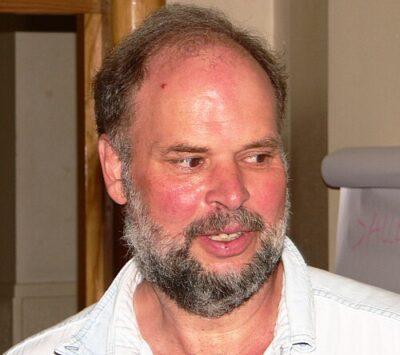 Vaughan JonesNew Zealand mathematician and Fields Medalist (1952–2020)
- JJoan BirmanU.S. mathematician