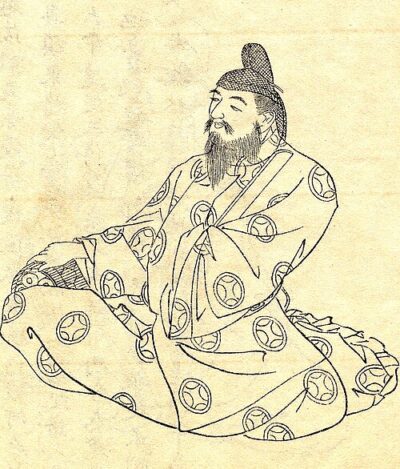
Kojiki
Kojiki is a 8th-century Japanese chronicle. It came out in 712. It was written by Hieda no Are and Ō no Yasumaro. It is based on Teiki.
- Came out
- 712
- Written by
- Hieda no Are
- Genre
- history book
All 9 facts, and where they come from
Facts
9 facts · 0 confirmed by two sources · 0 cited · 9 from one source
Where this comes from
Papalocal keeps its own record. It started from these sources; what each one said is kept here as it was copied, so a change on their side never changes this page by itself. Tap one to read its version.
What Wikidata says · copied November 18, 2026 · revision 2560975621
- Described as
- 8th-century Japanese chronicle
- Other names
- Records of Ancient Matters, An Account of Ancient Matters, Koji-ki, Furukotofumi, Furokotobumi
- What it is
- literary work; written work
- Written by
- Hieda no Are; Ō no Yasumaro
- Genre
- history book
- Language
- Japanese
- Based on
- Teiki; Kyūji
- Came out
- 712
- Wikipedias with a page
- 66
Wikidata item Q813031 (wikidata.org/wiki/Q813031), public domain (CC0). Copied 2026-11-18.
What Wikipedia says · copied November 18, 2026 · revision 1385955431
The Kojiki (古事記; Japanese pronunciation: [kó̞.(ɟ̟͡)ʑì.k̟ʲì, kò̞.(ɟ̟͡)ʑí.-], "Records of Ancient Matters" or "An Account of Ancient Matters"), also sometimes read as Furukotofumi or Furukotobumi, is an early Japanese chronicle of myths, legends, hymns, genealogies, oral traditions, and semi-historical accounts dating as far back as 641 concerning the origin of the Japanese archipelago, the kami, and the Japanese imperial line. The preface of the book claims it was composed by Ō no Yasumaro at the request of Empress Genmei in the early 8th century (711–712). It is therefore usually considered to be the oldest extant literary work in Japan. The book is written in Classical Chinese, though it includes some songs and poems in Old Japanese that are transcribed phonetically using Chinese characters.
The myths contained in the Kojiki as well as the Nihon Shoki are part of the inspiration behind many practices and unified "Shinto orthodoxy". Later, they were incorporated into Shinto practices such as the misogi purification ritual.
From the Wikipedia article “Kojiki” (en.wikipedia.org/wiki/Kojiki), by its contributors, under CC BY-SA 4.0 (creativecommons.org/licenses/by-sa/4.0/). Copied 2026-11-18; not changed.
Confirmed Two sources agree. Cited One source, and it names where it got it. One source One source, without a reference of its own. Sources disagree The sources disagree. We show the best-supported value and keep theirs below.
Picture: Wikimedia Commons: Shinpukuji-bon Kojiki (真福寺本古事記).png · See Commons file page