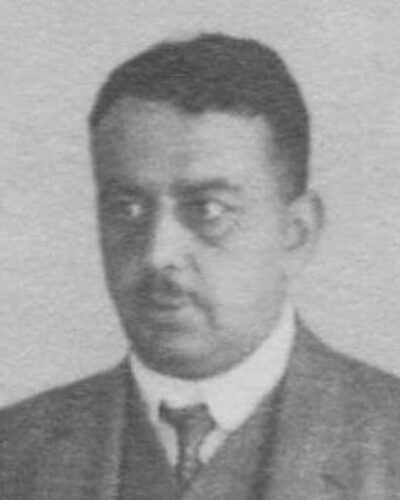
König's theorem
König's theorem is a theorem showing that maximum matching and minimum vertex cover are equivalent for bipartite graphs.
All 2 facts, and where they come from
Facts
2 facts · 0 confirmed by two sources · 0 cited · 2 from one source
Where this comes from
Papalocal keeps its own record. It started from these sources; what each one said is kept here as it was copied, so a change on their side never changes this page by itself. Tap one to read its version.
What Wikidata says · copied November 18, 2026 · revision 2463469718
- Described as
- theorem showing that maximum matching and minimum vertex cover are equivalent for bipartite graphs
- Other names
- König–Hall theorem, König–Egerváry theorem
- What it is
- theorem
- Named after
- Dénes Kőnig
- Wikipedias with a page
- 13
Wikidata item Q897769 (wikidata.org/wiki/Q897769), public domain (CC0). Copied 2026-11-18.
What Wikipedia says · copied November 18, 2026 · revision 1352721742
In the mathematical area of graph theory, Kőnig's theorem, proved by Dénes Kőnig (1931), describes an equivalence between the maximum matching problem and the minimum vertex cover problem in bipartite graphs. It was discovered independently, also in 1931, by Jenő Egerváry in the more general case of weighted graphs.
From the Wikipedia article “Kőnig's theorem (graph theory)” (en.wikipedia.org/wiki/Kőnig's_theorem_(graph_theory)), by its contributors, under CC BY-SA 4.0 (creativecommons.org/licenses/by-sa/4.0/). Copied 2026-11-18; not changed.
Confirmed Two sources agree. Cited One source, and it names where it got it. One source One source, without a reference of its own. Sources disagree The sources disagree. We show the best-supported value and keep theirs below.