Köppen climate classification
Köppen climate classification is a climate classification system. It came out in 1884.
- Came out
- 1884
All 4 facts, and where they come from
Facts
4 facts · 0 confirmed by two sources · 0 cited · 4 from one source
Where this comes from
Papalocal keeps its own record. It started from these sources; what each one said is kept here as it was copied, so a change on their side never changes this page by itself. Tap one to read its version.
What Wikidata says · copied November 17, 2026 · revision 2561338934
- Described as
- climate classification system
- Other names
- Köppen–Geiger climate classification system, Koppen climate classification system
- What it is
- effective climate classification
- Came out
- 1884
- Named after
- Wladimir Köppen; Rudolf Geiger
- Wikipedias with a page
- 88
Wikidata item Q124095 (wikidata.org/wiki/Q124095), public domain (CC0). Copied 2026-11-17.
What Wikipedia says · copied November 17, 2026 · revision 1377884448
The Köppen climate classification divides Earth's climates into five main climate groups, with each group being divided based on patterns of seasonal precipitation and temperature. The five main groups are A (tropical), B (arid), C (temperate), D (continental), and E (polar). Each group and subgroup is represented by a letter. All climates are assigned a main group (the first letter). All climates except for those in the E group are assigned a seasonal precipitation subgroup (the second letter). For example, Af indicates a tropical rainforest climate. The system assigns a temperature subgroup for all groups other than those in the A group, indicated by the third letter for climates in B, C, D, and the second letter for climates in E. Other examples include: Cfb indicating an oceanic climate with warm summers as indicated by the ending b, while Dwb indicates a semi-monsoonal continental climate, also with warm summers. Climates are classified based on specific criteria unique to each climate type.
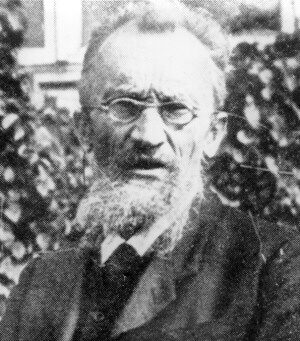
The Köppen climate classification is the most widely used climate classification scheme. It was first published by German-Russian climatologist Wladimir Köppen (1846–1940) in 1884, with several later modifications by Köppen, notably in 1918 and 1936. Later, German climatologist Rudolf Geiger (1894–1981) introduced some changes to the classification system in 1954 and 1961, which is thus sometimes called the Köppen–Geiger climate classification.
As Köppen designed the system based on his experience as a botanist, his main climate groups represent a classification by vegetation type. In addition to identifying climates, the system can be used to analyze ecosystem conditions and identify the main types of vegetation within climates. Due to its association with the plant life of a given region, the system is useful in predicting future changes of plant life within that region.
The Köppen climate classification system was modified further within the Trewartha climate classification system in 1966 (revised in 1980). The Trewartha system sought to create a more refined middle latitude climate zone, which was one of the criticisms of the Köppen system (the climate group C was too general).
From the Wikipedia article “Köppen climate classification” (en.wikipedia.org/wiki/Köppen_climate_classification), by its contributors, under CC BY-SA 4.0 (creativecommons.org/licenses/by-sa/4.0/). Copied 2026-11-17; not changed.
Confirmed Two sources agree. Cited One source, and it names where it got it. One source One source, without a reference of its own. Sources disagree The sources disagree. We show the best-supported value and keep theirs below.