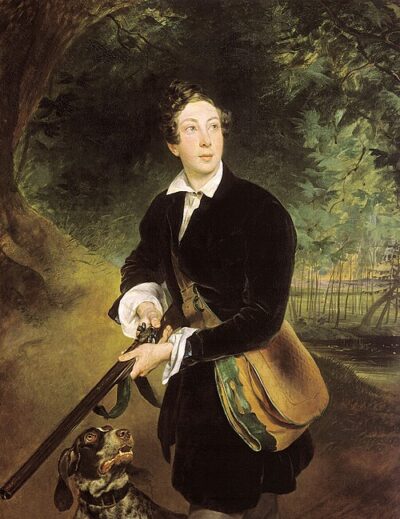
Kozma Prutkov
Kozma Prutkov is a fictional Russian author.
All 3 facts, and where they come from
Facts
3 facts · 0 confirmed by two sources · 0 cited · 3 from one source
Where this comes from
Papalocal keeps its own record. It started from these sources; what each one said is kept here as it was copied, so a change on their side never changes this page by itself. Tap one to read its version.
What Wikidata says · copied November 17, 2026 · revision 2569254436
- Described as
- fictional Russian author
- What it is
- heteronym; fictional human; collective pseudonym
- Wikipedias with a page
- 21
Wikidata item Q1784989 (wikidata.org/wiki/Q1784989), public domain (CC0). Copied 2026-11-17.
What Wikipedia says · copied November 17, 2026 · revision 1289696709
Kozma Petrovich Prutkov (Russian: Козьма́ Петро́вич Прутко́в) is a fictional author invented by Aleksey Konstantinovich Tolstoy (1817-1875) and his cousins, the brothers Alexei Zhemchuzhnikov (1821–1908), Vladimir Zhemchuzhnikov (1830–1884) and Alexander Zhemchuzhnikov (1826–1896), during the later part of the rule (1825–1855) of Emperor Nicholas I of Russia.
The four distinguished satirical poets used this pseudonym as a collective pen-name to publish parody aphorisms, fables, and epigrams, as well as satiric, humorous and nonsense verses in the 1850s and 1860s, most notably in the literary magazine Sovremennik (The Contemporary).
According to the (fictional) Biographical data on Kozma Prutkov,
Prutkov, allegedly born on April 11, 1803, died on January 13, 1863. He worked for the government of the Russian Empire his entire adult life, and in 1820 entered military service as a hussar only for the uniform. He worked at the Assay Office (Пробирная Палата)
from 1823 until his death, ending up as its director.
From the Wikipedia article “Kozma Prutkov” (en.wikipedia.org/wiki/Kozma_Prutkov), by its contributors, under CC BY-SA 4.0 (creativecommons.org/licenses/by-sa/4.0/). Copied 2026-11-17; not changed.
Confirmed Two sources agree. Cited One source, and it names where it got it. One source One source, without a reference of its own. Sources disagree The sources disagree. We show the best-supported value and keep theirs below.
Picture: Wikimedia Commons: Kozma Prutkov by L M Zhemchuzhnikov.jpg · See Commons file page