Kristin Lavransdatter
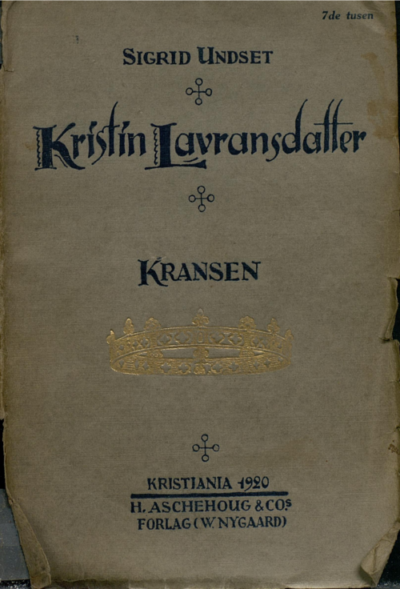
Kristin Lavransdatter is a book by Sigrid Undset. It came out in 1920.
- Released
- 1920
- Came out
- 1920
- Written by
- Sigrid Undset
- Country of origin
- Norway
All 9 facts, and where they come from
Facts
9 facts · 0 confirmed by two sources · 0 cited · 9 from one source
Where this comes from
Papalocal keeps its own record. It started from these sources; what each one said is kept here as it was copied, so a change on their side never changes this page by itself. Tap one to read its version.
What Wikidata says · copied November 17, 2026 · revision 2569527221
- Described as
- book by Sigrid Undset
- What it is
- novel series; book series
- Written by
- Sigrid Undset
- Publisher
- Aschehoug · 1 reference
- Released
- 1920
- Language
- Norwegian
- Country of origin
- Norway
- Followed by
- The Master of Hestviken
- Came out
- 1920
- Wikipedias with a page
- 16
Wikidata item Q1755757 (wikidata.org/wiki/Q1755757), public domain (CC0). Copied 2026-11-17.
What Wikipedia says · copied November 17, 2026 · revision 1384263487
Kristin Lavransdatter is a trilogy of historical novels written by Sigrid Undset. The individual novels are Kransen (The Wreath), first published in 1920, Husfrue (The Wife), published in 1921, and Korset (The Cross), published in 1922. Kransen and Husfrue were translated from the original Norwegian as The Bridal Wreath and The Mistress of Husaby, respectively, in the first English translation by Charles Archer and J. S. Scott.
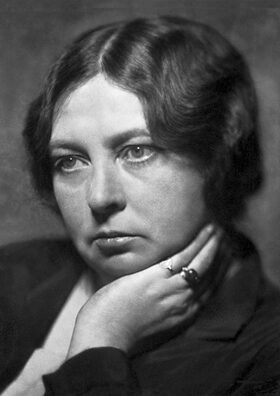
This work formed the basis of Undset receiving the 1928 Nobel Prize in Literature, which was awarded to her "principally for her powerful descriptions of Northern life during the Middle Ages". Her work is much admired for its historical and ethnological accuracy.
From the Wikipedia article “Kristin Lavransdatter” (en.wikipedia.org/wiki/Kristin_Lavransdatter), by its contributors, under CC BY-SA 4.0 (creativecommons.org/licenses/by-sa/4.0/). Copied 2026-11-17; not changed.
Confirmed Two sources agree. Cited One source, and it names where it got it. One source One source, without a reference of its own. Sources disagree The sources disagree. We show the best-supported value and keep theirs below.
Picture: Aschehoug forlag, via Wikimedia Commons · Public domain