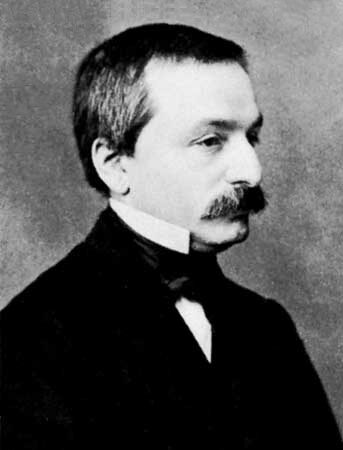
Kronecker delta
Kronecker delta is a function.
All 4 facts, and where they come from
Facts
4 facts · 0 confirmed by two sources · 0 cited · 4 from one source
Where this comes from
Papalocal keeps its own record. It started from these sources; what each one said is kept here as it was copied, so a change on their side never changes this page by itself. Tap one to read its version.
What Wikidata says · copied November 17, 2026 · revision 2556206673
- Described as
- function
- Other names
- Kronecker delta symbol
- What it is
- function; integer-valued function; binary function
- Named after
- Leopold Kronecker
- Wikipedias with a page
- 53
Wikidata item Q192826 (wikidata.org/wiki/Q192826), public domain (CC0). Copied 2026-11-17.
What Wikipedia says · copied November 17, 2026 · revision 1374418439
In mathematics, the Kronecker delta (named after Leopold Kronecker), is a function of two variables, usually non-negative integers. The function is 1 if the variables are equal, and 0 otherwise:
δij={0if i≠j,1if i=j.
or with use of Iverson brackets:
δij=[i=j]
For example, δ12=0 because 1≠2, whereas δ33=1 because 3=3.
The Kronecker delta appears naturally in many areas of mathematics, physics, engineering and computer science, as a means of compactly expressing its definition above.
Generalized versions of the Kronecker delta have found applications in differential geometry and modern tensor calculus, particularly in formulations of gauge theory and topological field models.
In linear algebra, the n×n identity matrix 𝐈 has entries equal to the Kronecker delta:
Iij=δij
where i and j take the values 1,2,⋯,n, and the inner product of vectors can be written as
𝐚⋅𝐛=∑i,j=1naiδijbj=∑i=1naibi.
Here the Euclidean vectors are defined as n-tuples: 𝐚=(a1,a2,…,an) and 𝐛=(b1,b2,...,bn) and the last step is obtained by using the values of the Kronecker delta to reduce the summation over j.
It is common for i and j to be restricted to a set of the form {1, 2, ..., n} or {0, 1, ..., n − 1}, but the Kronecker delta can be defined on an arbitrary set.
From the Wikipedia article “Kronecker delta” (en.wikipedia.org/wiki/Kronecker_delta), by its contributors, under CC BY-SA 4.0 (creativecommons.org/licenses/by-sa/4.0/). Copied 2026-11-17; not changed.
Confirmed Two sources agree. Cited One source, and it names where it got it. One source One source, without a reference of its own. Sources disagree The sources disagree. We show the best-supported value and keep theirs below.