Kronecker product
Kronecker product is a binary operation on matrices.
All 4 facts, and where they come from
Facts
4 facts · 0 confirmed by two sources · 0 cited · 4 from one source
Where this comes from
Papalocal keeps its own record. It started from these sources; what each one said is kept here as it was copied, so a change on their side never changes this page by itself. Tap one to read its version.
What Wikidata says · copied November 17, 2026 · revision 2542395559
- Described as
- binary operation on matrices
- Other names
- Zehfuss matrix, tensor product of matrices
- What it is
- binary operation; matrix operation; mathematical concept
- Named after
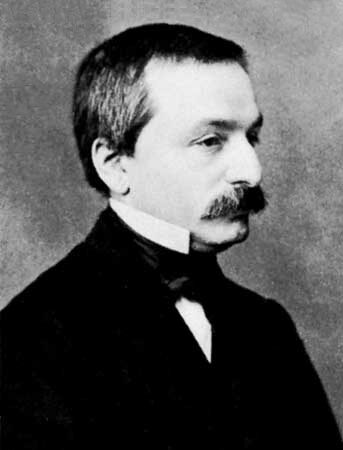
- Leopold Kronecker
- Wikipedias with a page
- 26
Wikidata item Q1238125 (wikidata.org/wiki/Q1238125), public domain (CC0). Copied 2026-11-17.
What Wikipedia says · copied November 17, 2026 · revision 1375689631
In mathematics, the Kronecker product, sometimes denoted by ⊗, is an operation on two matrices of arbitrary size resulting in a block matrix. It is a specialization of the tensor product (which is denoted by the same symbol) from vectors to matrices and gives the matrix of the tensor product linear map with respect to a standard choice of basis. The Kronecker product is to be distinguished from the usual matrix multiplication, which is an entirely different operation. The Kronecker product is also sometimes called matrix direct product.
The Kronecker product is named after the German mathematician Leopold Kronecker (1823–1891), even though there is little evidence that he was the first to define and use it. The Kronecker product has also been called the Zehfuss matrix, and the Zehfuss product, after Johann Georg Zehfuss, who in 1858 described this matrix operation, but Kronecker product is currently the most widely used term. The misattribution to Kronecker rather than Zehfuss was due to Kurt Hensel.
From the Wikipedia article “Kronecker product” (en.wikipedia.org/wiki/Kronecker_product), by its contributors, under CC BY-SA 4.0 (creativecommons.org/licenses/by-sa/4.0/). Copied 2026-11-17; not changed.
Confirmed Two sources agree. Cited One source, and it names where it got it. One source One source, without a reference of its own. Sources disagree The sources disagree. We show the best-supported value and keep theirs below.