Kronecker–Weber theorem
Kronecker–Weber theorem is a theorem.
All 1 facts, and where they come from
Facts
1 facts · 0 confirmed by two sources · 0 cited · 1 from one source
Where this comes from
Papalocal keeps its own record. It started from these sources; what each one said is kept here as it was copied, so a change on their side never changes this page by itself. Tap one to read its version.
What Wikidata says · copied November 17, 2026 · revision 2408254604
- Described as
- theorem
- Other names
- Kronecker-Weber theorem
- What it is
- theorem
- Wikipedias with a page
- 14
Wikidata item Q1369453 (wikidata.org/wiki/Q1369453), public domain (CC0). Copied 2026-11-17.
What Wikipedia says · copied November 17, 2026 · revision 1366622724
In algebraic number theory, it can be shown that every cyclotomic field is an abelian extension of the rational number field Q, having Galois group of the form (ℤ/nℤ)×. The Kronecker–Weber theorem provides a partial converse: every finite abelian extension of Q is contained within some cyclotomic field. In other words, every algebraic integer whose Galois group is abelian can be expressed as a sum of roots of unity with rational coefficients. For example,
5=e2πi/5−e4πi/5−e6πi/5+e8πi/5, −3=e2πi/3−e4πi/3, and 3=eπi/6−e5πi/6.
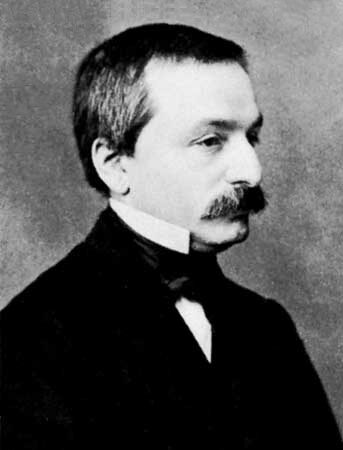
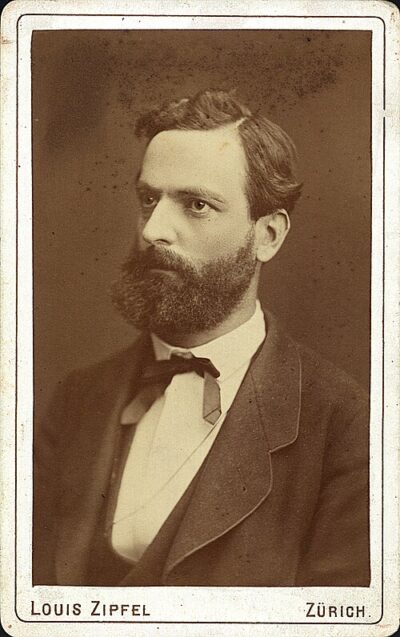
The theorem is named after Leopold Kronecker and Heinrich Martin Weber.
From the Wikipedia article “Kronecker–Weber theorem” (en.wikipedia.org/wiki/Kronecker–Weber_theorem), by its contributors, under CC BY-SA 4.0 (creativecommons.org/licenses/by-sa/4.0/). Copied 2026-11-17; not changed.
Confirmed Two sources agree. Cited One source, and it names where it got it. One source One source, without a reference of its own. Sources disagree The sources disagree. We show the best-supported value and keep theirs below.