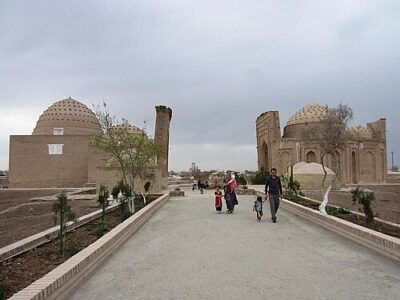
Kubrawiya
Kubrawiya is a Sufi order.
All 3 facts, and where they come from
Facts
3 facts · 0 confirmed by two sources · 0 cited · 3 from one source
Where this comes from
Papalocal keeps its own record. It started from these sources; what each one said is kept here as it was copied, so a change on their side never changes this page by itself. Tap one to read its version.
What Wikidata says · copied November 19, 2026 · revision 2570972346
- Described as
- Sufi order
- Other names
- D̲h̲ahabiyya
- What it is
- tariqa
- Founded by
- Najmuddin Kubra
- Named after
- Najmuddin Kubra
- Wikipedias with a page
- 14
Wikidata item Q375436 (wikidata.org/wiki/Q375436), public domain (CC0). Copied 2026-11-19.
What Wikipedia says · copied November 19, 2026 · revision 1363522836
The Kubrawiya order (Arabic: سلسلة کبرویة) or Kubrawi order, also known as Kubrawi Hamadani, is a Sufi order. The Kubrawiya order is named after its 13th-century founder Najm al-Din Kubra, who lived in Konye-Urgench (present day Turkmenistan) under the Khwarazmian dynasty. In 1221, the Mongols captured Konye-Urgench and killed much of its population, including Sheikh Najmuddin Kubra.
The Kubrawiya order places emphasis on the universality of its approach. It is popular in Bangladesh, Mauritius, eastern India, and some areas of Pakistan.
From the Wikipedia article “Kubrawiya” (en.wikipedia.org/wiki/Kubrawiya), by its contributors, under CC BY-SA 4.0 (creativecommons.org/licenses/by-sa/4.0/). Copied 2026-11-19; not changed.
Confirmed Two sources agree. Cited One source, and it names where it got it. One source One source, without a reference of its own. Sources disagree The sources disagree. We show the best-supported value and keep theirs below.