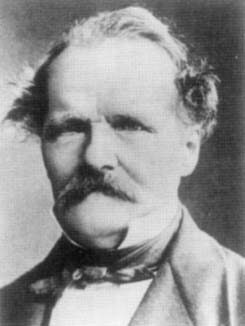
Kummer theory
Kummer theory is a mathematical theory describing field extensions involving the adjunction of nth roots.
All 2 facts, and where they come from
Facts
2 facts · 0 confirmed by two sources · 0 cited · 2 from one source
Where this comes from
Papalocal keeps its own record. It started from these sources; what each one said is kept here as it was copied, so a change on their side never changes this page by itself. Tap one to read its version.
What Wikidata says · copied November 17, 2026 · revision 2541102624
- Described as
- mathematical theory describing field extensions involving the adjunction of nth roots
- What it is
- branch of mathematics
- Named after
- Ernst Kummer · 1 reference
- Wikipedias with a page
- 9
Wikidata item Q1548483 (wikidata.org/wiki/Q1548483), public domain (CC0). Copied 2026-11-17.
What Wikipedia says · copied November 17, 2026 · revision 1353744250
In abstract algebra and number theory, Kummer theory provides a description of certain types of field extensions involving the adjunction of nth roots of elements of the base field. The theory was originally developed by Ernst Eduard Kummer around the 1840s in his pioneering work on Fermat's Last Theorem. The main statements do not depend on the nature of the field – apart from its characteristic, which should not divide the integer n – and therefore belong to abstract algebra. The theory of cyclic extensions of the field K when the characteristic of K does divide n is called Artin–Schreier theory.
Kummer theory is basic, for example, in class field theory and in general in understanding abelian extensions; it says that in the presence of enough roots of unity, cyclic extensions can be understood in terms of extracting roots. The main burden in class field theory is to dispense with extra roots of unity ('descending' back to smaller fields); which is something much more serious.
From the Wikipedia article “Kummer theory” (en.wikipedia.org/wiki/Kummer_theory), by its contributors, under CC BY-SA 4.0 (creativecommons.org/licenses/by-sa/4.0/). Copied 2026-11-17; not changed.
Confirmed Two sources agree. Cited One source, and it names where it got it. One source One source, without a reference of its own. Sources disagree The sources disagree. We show the best-supported value and keep theirs below.