Kutta–Joukowski theorem
Kutta–Joukowski theorem is a theorem.
All 3 facts, and where they come from
Facts
3 facts · 0 confirmed by two sources · 0 cited · 3 from one source
Where this comes from
Papalocal keeps its own record. It started from these sources; what each one said is kept here as it was copied, so a change on their side never changes this page by itself. Tap one to read its version.
What Wikidata says · copied November 17, 2026 · revision 2459321386
- Described as
- theorem
- What it is
- theorem
- Named after
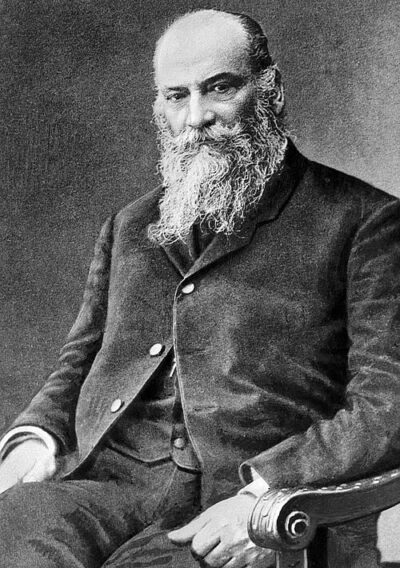
- Nikolay Zhukovsky; Martin Wilhelm Kutta
- Wikipedias with a page
- 18
Wikidata item Q1752988 (wikidata.org/wiki/Q1752988), public domain (CC0). Copied 2026-11-17.
What Wikipedia says · copied November 17, 2026 · revision 1384112728
The Kutta–Joukowski theorem is a fundamental theorem in aerodynamics that relates the lift per unit span of an airfoil (and any two-dimensional body, including circular cylinders) translating in a uniform fluid at constant speed to the circulation of the velocity field, under conditions where the flow in the body-fixed frame is steady and unseparated. The theorem relates the lift generated by an airfoil to the speed of the airfoil through the fluid, the density of the fluid and the circulation around the airfoil. The circulation is defined as the line integral around a closed loop enclosing the airfoil of the component of the velocity of the fluid tangent to the loop. It is named after Martin Kutta and Nikolai Zhukovsky (or Joukowski) who first developed its key ideas in the early 20th century. Kutta–Joukowski theorem is an inviscid theory, but it is a good approximation for real viscous flow in typical aerodynamic applications.
Kutta–Joukowski theorem relates lift to circulation much like the Magnus effect relates side force (called Magnus force) to rotation. However, the circulation here is not induced by rotation of the airfoil. The fluid flow in the presence of the airfoil can be considered to be the superposition of a translational flow and a rotating flow. This rotating flow is induced by the effects of camber, angle of attack and the sharp trailing edge of the airfoil. It should not be confused with a vortex like a tornado encircling the airfoil. At a large distance from the airfoil, the rotating flow may be regarded as induced by a line vortex (with the rotating line perpendicular to the two-dimensional plane). In the derivation of the Kutta–Joukowski theorem the airfoil is usually mapped onto a circular cylinder. In many textbooks, the theorem is proved for a circular cylinder and the Joukowski airfoil, but it holds true for general airfoils.
From the Wikipedia article “Kutta–Joukowski theorem” (en.wikipedia.org/wiki/Kutta–Joukowski_theorem), by its contributors, under CC BY-SA 4.0 (creativecommons.org/licenses/by-sa/4.0/). Copied 2026-11-17; not changed.
Confirmed Two sources agree. Cited One source, and it names where it got it. One source One source, without a reference of its own. Sources disagree The sources disagree. We show the best-supported value and keep theirs below.