La Strada
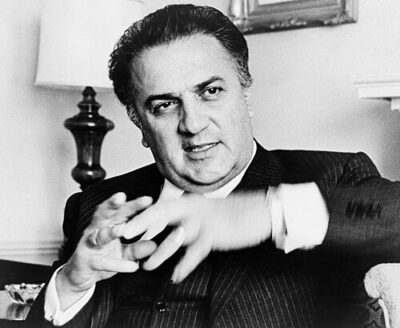
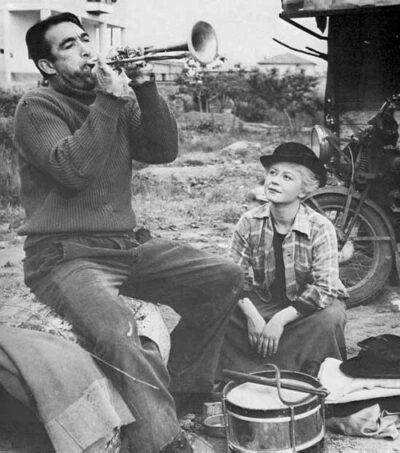
La Strada is a 1954 film directed by Federico Fellini. It stars Anthony Quinn, Giulietta Masina and Richard Basehart. It won the Academy Award for Best International Feature Film.
- Released
- September 6, 1954
- Directed by
- Federico Fellini
- Genre
- drama film
- Country of origin
- Italy
All 22 facts, and where they come from
Facts
22 facts · 0 confirmed by two sources · 12 cited · 10 from one source
Where this comes from
Papalocal keeps its own record. It started from these sources; what each one said is kept here as it was copied, so a change on their side never changes this page by itself. Tap one to read its version.
What Wikidata says · copied November 17, 2026 · revision 2568787045
- Described as
- 1954 film directed by Federico Fellini
- Other names
- Strada, La strada, The Road
- What it is
- film
- Directed by
- Federico Fellini · 4 references
- Music by
- Nino Rota
- Screenplay by
- Tullio Pinelli; Ennio Flaiano; Federico Fellini
- Produced by
- Dino De Laurentiis; Carlo Ponti
- Starring
- Anthony Quinn · 4 references; Giulietta Masina · 4 references; Richard Basehart · 4 references; Aldo Silvani · 3 references; Lidia Venturini; Mario Passante · 2 references; Marcella Rovena · 1 reference; Pietro Ceccarelli · 1 reference; Goffredo Unger · 1 reference
- Genre
- drama film · 1 reference
- Released
- September 6, 1954 · 1 reference; September 23, 1954 · 1 reference
- Original language
- Italian
- Country of origin
- Italy
- Awards
- Academy Award for Best International Feature Film (1957) · 1 reference
- Wikipedias with a page
- 56
Wikidata item Q18402 (wikidata.org/wiki/Q18402), public domain (CC0). Copied 2026-11-17.
What Wikipedia says · copied November 17, 2026 · revision 1375679635
La Strada (English: "The Road") is a 1954 Italian road tragedy film directed by Federico Fellini and co-written by Fellini, Tullio Pinelli and Ennio Flaiano. The film tells the story of Gelsomina (Giulietta Masina), a simple-minded young woman bought from her mother by Zampanò (Anthony Quinn), a brutish strongman who takes her with him on the road.
Fellini described La Strada as "a complete catalogue of my entire mythological world, a dangerous representation of my identity that was undertaken with no precedent whatsoever". As a result, the film demanded more time and effort than any of his other works, before or later. The development process was long and tortuous; there were problems during production, including insecure financial backing, problematic casting, and numerous delays. Finally, just before the production completed shooting, Fellini suffered a nervous breakdown that required medical treatment so that he could complete principal photography. Initial critical reaction was harsh, and the film's screening at the Venice Film Festival was the occasion of a bitter controversy that escalated into a public brawl between Fellini's supporters and detractors.
Subsequently, however, La Strada has become "one of the most influential films ever made", according to the American Film Institute. It won the inaugural Academy Award for Best Foreign Language Film in 1957. It was placed fourth in the 1992 British Film Institute directors' list of cinema's top 10 films.
In 2008, the film was included on the Italian Ministry of Cultural Heritage's 100 Italian films to be saved, a list of 100 films that "have changed the collective memory of the country between 1942 and 1978."
From the Wikipedia article “La Strada” (en.wikipedia.org/wiki/La_Strada), by its contributors, under CC BY-SA 4.0 (creativecommons.org/licenses/by-sa/4.0/). Copied 2026-11-17; not changed.
Confirmed Two sources agree. Cited One source, and it names where it got it. One source One source, without a reference of its own. Sources disagree The sources disagree. We show the best-supported value and keep theirs below.
Picture: A. Piatti (still photographer), Federico Fellini (director), Ponti-De Laurentiis (production), via Wikimedia Commons · Public domain