Laguerre formula
Laguerre formula is a Mathematical formula.
All 1 facts, and where they come from
Facts
1 facts · 0 confirmed by two sources · 0 cited · 1 from one source
Where this comes from
Papalocal keeps its own record. It started from these sources; what each one said is kept here as it was copied, so a change on their side never changes this page by itself. Tap one to read its version.
What Wikidata says · copied November 18, 2026 · revision 2425872191
- Described as
- Mathematical formula
- What it is
- mathematical concept
- Wikipedias with a page
- 2
Wikidata item Q18344810 (wikidata.org/wiki/Q18344810), public domain (CC0). Copied 2026-11-18.
What Wikipedia says · copied November 18, 2026 · revision 1140749509
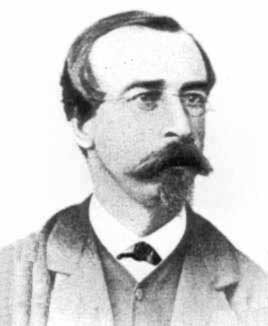
The Laguerre formula (named after Edmond Laguerre) provides the acute angle ϕ between two proper real lines, as follows:
ϕ=|12iLogCr(I1,I2,P1,P2)|
where:Log is the principal value of the complex logarithm
Cr is the cross-ratio of four collinear points
P1 and P2 are the points at infinity of the lines
I1 and I2 are the intersections of the absolute conic, having equations x0=x12+x22+x32=0, with the line joining P1 and P2.
The expression between vertical bars is a real number.
Laguerre formula can be useful in computer vision, since the absolute conic has an image on the retinal plane which is invariant under camera displacements, and the cross ratio of four collinear points is the same for their images on the retinal plane.
From the Wikipedia article “Laguerre formula” (en.wikipedia.org/wiki/Laguerre_formula), by its contributors, under CC BY-SA 4.0 (creativecommons.org/licenses/by-sa/4.0/). Copied 2026-11-18; not changed.
Confirmed Two sources agree. Cited One source, and it names where it got it. One source One source, without a reference of its own. Sources disagree The sources disagree. We show the best-supported value and keep theirs below.