Laguerre polynomial
Laguerre polynomial is a polynomial sequence.
All 4 facts, and where they come from
Facts
4 facts · 0 confirmed by two sources · 0 cited · 4 from one source
Where this comes from
Papalocal keeps its own record. It started from these sources; what each one said is kept here as it was copied, so a change on their side never changes this page by itself. Tap one to read its version.
What Wikidata says · copied November 18, 2026 · revision 2498033263
- Described as
- polynomial sequence
- Other names
- Laguerre polynomials
- What it is
- polynomial sequence; Classical orthogonal polynomials; special function
- Named after
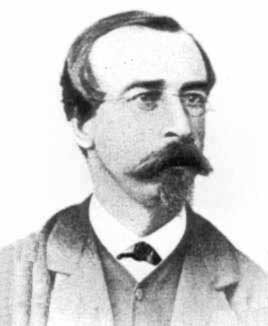
- Edmond Laguerre
- Wikipedias with a page
- 25
Wikidata item Q1124546 (wikidata.org/wiki/Q1124546), public domain (CC0). Copied 2026-11-18.
What Wikipedia says · copied November 18, 2026 · revision 1385418550
In mathematics, the Laguerre polynomials, named after Edmond Laguerre (1834–1886), are nontrivial solutions of Laguerre's differential equation:
xy″+(1−x)y′+ny=0, y=L(x)
which is a second-order linear differential equation. This equation has nonsingular solutions only if n is a non-negative integer.
Sometimes the name Laguerre polynomials is used for solutions of
xy″+(α+1−x)y′+ny=0 .
where n is still a non-negative integer.
Then they are also named generalized Laguerre polynomials, as will be done here (alternatively associated Laguerre polynomials or, rarely, Sonine polynomials, after their inventor Nikolay Yakovlevich Sonin).
More generally, a Laguerre function is a solution when n is not necessarily a non-negative integer.
The Laguerre polynomials are also used for Gauss–Laguerre quadrature to numerically compute integrals of the form
∫0∞f(x)e−xdx.
These polynomials, usually denoted L0, L1, ..., are a polynomial sequence which may be defined by the Rodrigues formula,
Ln(x)=exn!dndxn(e−xxn)=1n!(ddx−1)nxn,
reducing to the closed form of a following section.
They are orthogonal polynomials with respect to an inner product
⟨f,g⟩=∫0∞f(x)g(x)e−xdx.
The rook polynomials in combinatorics are more or less the same as Laguerre polynomials, up to elementary changes of variables. Further see the Tricomi–Carlitz polynomials.
The Laguerre polynomials arise in quantum mechanics, in the radial part of the solution of the Schrödinger equation for a one-electron atom. They also describe the static Wigner functions of oscillator systems in quantum mechanics in phase space. They further enter in the quantum mechanics of the Morse potential and of the 3D isotropic harmonic oscillator.
Physicists sometimes use a definition for the Laguerre polynomials that is larger by a factor of n! than the definition used here. (Likewise, some physicists may use somewhat different definitions of the so-called associated Laguerre polynomials.)
From the Wikipedia article “Laguerre polynomials” (en.wikipedia.org/wiki/Laguerre_polynomials), by its contributors, under CC BY-SA 4.0 (creativecommons.org/licenses/by-sa/4.0/). Copied 2026-11-18; not changed.
Confirmed Two sources agree. Cited One source, and it names where it got it. One source One source, without a reference of its own. Sources disagree The sources disagree. We show the best-supported value and keep theirs below.