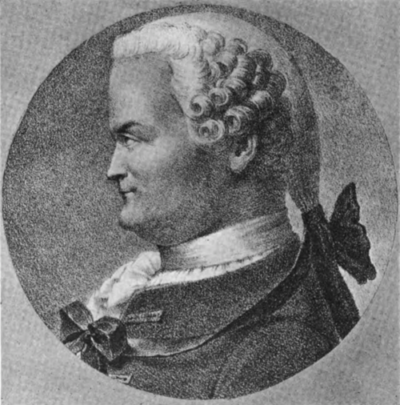
Lambert's cosine law
Lambert's cosine law is a description in optics of the angular dependency of the radiant intensity of a radiant surface.
All 2 facts, and where they come from
Facts
2 facts · 0 confirmed by two sources · 0 cited · 2 from one source
Where this comes from
Papalocal keeps its own record. It started from these sources; what each one said is kept here as it was copied, so a change on their side never changes this page by itself. Tap one to read its version.
What Wikidata says · copied November 17, 2026 · revision 2545344522
- Described as
- description in optics of the angular dependency of the radiant intensity of a radiant surface
- Other names
- Lambert radiator
- What it is
- physical law
- Named after
- Johann Heinrich Lambert
- Wikipedias with a page
- 31
Wikidata item Q1190146 (wikidata.org/wiki/Q1190146), public domain (CC0). Copied 2026-11-17.
What Wikipedia says · copied November 17, 2026 · revision 1381118238
In optics, Lambert's cosine law says that the observed radiant intensity or luminous intensity from an ideal diffusely reflecting surface or ideal diffuse radiator is directly proportional to the cosine of the angle θ between the observer's line of sight and the surface normal; I = I0 cos θ. The law is also known as the cosine emission law or Lambert's emission law. It is named after Johann Heinrich Lambert, from his Photometria, published in 1760.
A surface which obeys Lambert's law is said to be Lambertian, and exhibits Lambertian reflectance. Such a surface has a constant radiance/luminance, regardless of the angle from which it is observed; a single human eye perceives such a surface as having a constant brightness, regardless of the angle from which the eye observes the surface. It has the same radiance because, although the emitted power from a given area element is reduced by the cosine of the emission angle, the solid angle, subtended by surface visible to the viewer, is reduced by the very same amount. Because the ratio between power and solid angle is constant, radiance (power per unit solid angle per unit projected source area) stays the same.
From the Wikipedia article “Lambert's cosine law” (en.wikipedia.org/wiki/Lambert's_cosine_law), by its contributors, under CC BY-SA 4.0 (creativecommons.org/licenses/by-sa/4.0/). Copied 2026-11-17; not changed.
Confirmed Two sources agree. Cited One source, and it names where it got it. One source One source, without a reference of its own. Sources disagree The sources disagree. We show the best-supported value and keep theirs below.