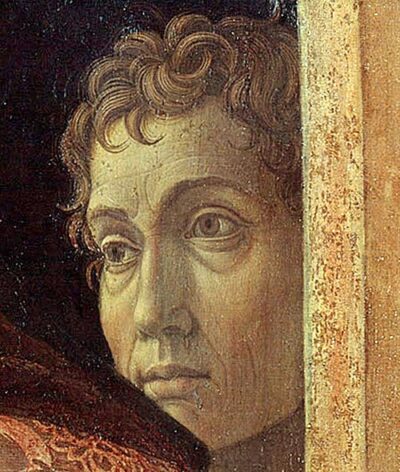
Lamentation of Christ
Lamentation of Christ is a painting by Andrea Mantegna. It came out in 1483.
- Came out
- 1483
- Created by
- Andrea Mantegna
- Genre
- religious art
All 6 facts, and where they come from
Facts
6 facts · 0 confirmed by two sources · 1 cited · 5 from one source
Where this comes from
Papalocal keeps its own record. It started from these sources; what each one said is kept here as it was copied, so a change on their side never changes this page by itself. Tap one to read its version.
What Wikidata says · copied November 17, 2026 · revision 2568677533
- Described as
- painting by Andrea Mantegna
- Other names
- Lamentation over the Dead Christ, Cristo morto
- What it is
- painting · 1 reference
- Created by
- Andrea Mantegna
- Genre
- religious art
- Came out
- 1483 · 1 reference
- Located in
- Milan · 1 reference
- Country
- Italy · 1 reference
- Wikipedias with a page
- 32
Wikidata item Q546297 (wikidata.org/wiki/Q546297), public domain (CC0). Copied 2026-11-17.
What Wikipedia says · copied November 17, 2026 · revision 1361278133
The Lamentation of Christ (also known as the Lamentation over the Dead Christ, The Foreshortened Christ, or the Dead Christ and Three Mourners and other variants) is a painting by the Italian Renaissance artist Andrea Mantegna. It portrays the body of Christ supine on a marble slab. He is watched over by the Virgin Mary, Saint John and St. Mary Magdalene weeping for his death. While the dating of the piece is debated, it was completed between 1475 and 1501, probably in the early 1480s. The painting is currently at the Pinacoteca di Brera in Milan.
From the Wikipedia article “Lamentation of Christ (Mantegna)” (en.wikipedia.org/wiki/Lamentation_of_Christ_(Mantegna)), by its contributors, under CC BY-SA 4.0 (creativecommons.org/licenses/by-sa/4.0/). Copied 2026-11-17; not changed.
Confirmed Two sources agree. Cited One source, and it names where it got it. One source One source, without a reference of its own. Sources disagree The sources disagree. We show the best-supported value and keep theirs below.
Picture: Wikimedia Commons: Lamentación sobre Cristo muerto, por Andrea Mantegna.jpg · See Commons file page