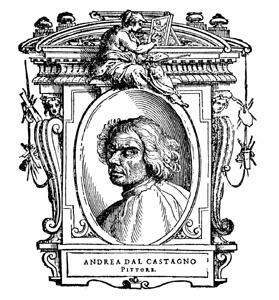
Last Supper
Last Supper is a fresco by Andrea del Castagno in the Refectory of Santa Apollonia. It came out in 1445.
- Came out
- 1445
- Created by
- Andrea del Castagno
- Genre
- religious art
All 10 facts, and where they come from
Facts
10 facts · 0 confirmed by two sources · 0 cited · 9 from one source · 1 where the sources disagree
What’s different
- Came out: we show 1445 (Sources disagree). Wikidata also lists 1440s
Where this comes from
Papalocal keeps its own record. It started from these sources; what each one said is kept here as it was copied, so a change on their side never changes this page by itself. Tap one to read its version.
What Wikidata says · copied November 17, 2026 · revision 2569012404
- Described as
- fresco by Andrea del Castagno in the Refectory of Santa Apollonia
- Other names
- The Last Supper
- What it is
- fresco; mural; fresco-secco
- Created by
- Andrea del Castagno
- Genre
- religious art
- Language
- English · 1 reference
- Came out
- 1445; 1440s; 1445
- Located in
- Florence
- Country
- Italy
- Owned by
- Sant'Apollonia
- Wikipedias with a page
- 8
Wikidata item Q3009677 (wikidata.org/wiki/Q3009677), public domain (CC0). Copied 2026-11-17.
What Wikipedia says · copied November 17, 2026 · revision 1361278790
The Last Supper (1445–1450) is a fresco by the Italian Renaissance artist Andrea del Castagno, located in the refectory of the convent of Sant'Apollonia, now the Museo di Cenacolo di Sant'Apollonia, and accessed through a door on Via Ventisette Aprile at the corner with Santa Reparata, in Florence, region of Tuscany. The painting depicts Jesus and the Apostles during the Last Supper, with Judas, unlike all the other apostles, sitting separately on the near side of the table, as is common in depictions of the Last Supper in Christian art.
Sant'Apollonia was a Benedictine convent of cloistered nuns, and Castagno's fresco was not publicly known until the convent was suppressed in 1866: Vasari, for example, seems not to have known of the painting. Thus its exclusively female audience should be considered in analyzing the work. Castagno painted a large chamber with life-sized figures that confronted the nuns at every meal. The fresco would have served as a didactic image and an inspiration to meditation on their relationship with Jesus. Painted with a careful attention to naturalistic detail—a sense of real space and light, seemingly tangible details of the setting, and lifelike figures—the work must have spoken forcefully of the continued significance of the Eucharistic meal in their own world.
From the Wikipedia article “Last Supper (Castagno)” (en.wikipedia.org/wiki/Last_Supper_(Castagno)), by its contributors, under CC BY-SA 4.0 (creativecommons.org/licenses/by-sa/4.0/). Copied 2026-11-17; not changed.
Confirmed Two sources agree. Cited One source, and it names where it got it. One source One source, without a reference of its own. Sources disagree The sources disagree. We show the best-supported value and keep theirs below.
Picture: Wikimedia Commons: Andrea del Castagno 001.jpg · See Commons file page