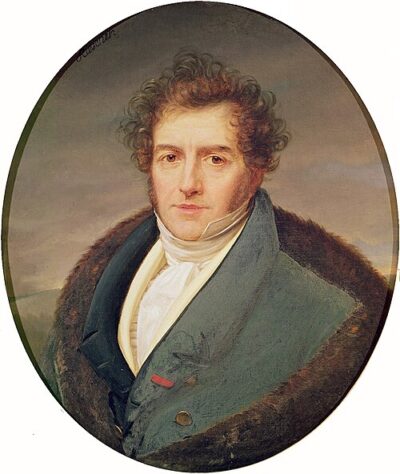
Le calife de Bagdad
Le calife de Bagdad is an opéra comique in one act by François-Adrien Boieldieu.
- Released
- 18th century
- Genre
- opéra comique
All 5 facts, and where they come from
Facts
5 facts · 0 confirmed by two sources · 2 cited · 3 from one source
Where this comes from
Papalocal keeps its own record. It started from these sources; what each one said is kept here as it was copied, so a change on their side never changes this page by itself. Tap one to read its version.
What Wikidata says · copied November 17, 2026 · revision 2478661633
- Described as
- opéra comique in one act by François-Adrien Boieldieu
- Other names
- The Caliph of Bagdad
- What it is
- dramatico-musical work
- Music by
- François Adrien Boieldieu · 1 reference
- Genre
- opéra comique · 1 reference
- Released
- 18th century
- Language
- French
- Wikipedias with a page
- 6
Wikidata item Q3220760 (wikidata.org/wiki/Q3220760), public domain (CC0). Copied 2026-11-17.
What Wikipedia says · copied November 17, 2026 · revision 1274976491
Le calife de Bagdad (The Caliph of Baghdad) is an opéra comique in one act by the French composer François-Adrien Boieldieu with a libretto by Claude Godard d'Aucourt de Saint-Just. Dedicated to the landscape painter Bidauld it was first performed at the Opéra-Comique, Paris, on 16 September 1800 and soon became highly popular throughout Europe.
It was Boieldieu's first major triumph. One member of the audience who was less impressed was the noted composer Luigi Cherubini who reproached Boieldieu, "Aren't you ashamed of such a great success, and doing so little to deserve it?" Boieldieu immediately applied to Cherubini for lessons in compositional techniques.
Le calife de Bagdad was part of the vogue for operas on Oriental subjects and the music makes use of local colour, especially the overture with its prominent "eastern" percussion. Késie's aria "De tous pays" is a bravura piece which illustrates the musical styles of several European countries, including Spain, Italy, Germany, Scotland and England. Le calife de Bagdad is believed to have influenced Carl Maria von Weber, particularly his operas Abu Hassan and Oberon.
From the Wikipedia article “Le calife de Bagdad” (en.wikipedia.org/wiki/Le_calife_de_Bagdad), by its contributors, under CC BY-SA 4.0 (creativecommons.org/licenses/by-sa/4.0/). Copied 2026-11-17; not changed.
Confirmed Two sources agree. Cited One source, and it names where it got it. One source One source, without a reference of its own. Sources disagree The sources disagree. We show the best-supported value and keep theirs below.