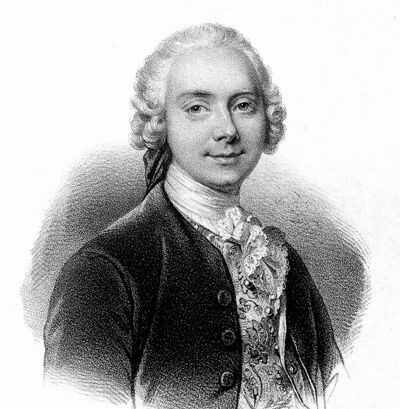
Le Méchant
Le Méchant is a play written by Jean-Baptiste-Louis Gresset. It came out in 1747.
- Published
- 1747
- Written by
- Jean-Baptiste-Louis Gresset
- Genre
- comedy drama
- Country of origin
- France
All 7 facts, and where they come from
Facts
7 facts · 0 confirmed by two sources · 0 cited · 7 from one source
Where this comes from
Papalocal keeps its own record. It started from these sources; what each one said is kept here as it was copied, so a change on their side never changes this page by itself. Tap one to read its version.
What Wikidata says · copied November 18, 2026 · revision 2500109781
- Described as
- play written by Jean-Baptiste-Louis Gresset
- Other names
- Le Mechant
- What it is
- comedy; literary work
- Written by
- Jean-Baptiste-Louis Gresset
- Genre
- comedy drama
- Published
- 1747
- Language
- French
- Country of origin
- France
- Wikipedias with a page
- 3
Wikidata item Q3224937 (wikidata.org/wiki/Q3224937), public domain (CC0). Copied 2026-11-18.
What Wikipedia says · copied November 18, 2026 · revision 1360011398
Le Méchant (French: The Villain) is a 1747 play by Jean-Baptiste-Louis Gresset. It is considered the best verse comedy of the eighteenth-century French stage.
Like Tartuffe (and Destouches's Ingrat and Médisant), the title character, Сléon, schemes to gain his provincial host's money and marry his female relatives - here, Géronte's sister and niece rather than his daughter. Сléon, who thinks the height of pleasure is to be both feared and desired, persuades Valère not to marry Сhloé and promises to marry Florise, but is eventually exposed by the wise Ariste and the clever Lisette, who enlist his manservant Frontin in support of their cause.
Madame de Pompadour, having promised Gresset that she would put on the play at her theatre, did so on February 6, 1748. She played Lisette, while the Duc de Chartres played Géronte and the Duc de Nivernais played Valère.
Several lines in Les Liaisons dangereuses refer or allude to Le Méchant: Madame de Merteuil quotes Cléon's "Les sots sont ici-bas pour nos menus plaisirs" (II.I) in letter 63, citing the play, and Valmont alludes to the same character's "Ma foi, quand je parcours tout ce qui le compose [le monde]/Je ne trouve que nous qui valions quelque chose" (II.III) in letter 100, when he says "En vérité, plus je vais, et plus je suis tenté de croire qu'il n'y a que vous et moi dans le monde, qui valions quelque chose." In 1792, Elizabeth Inchbald adapted the play into the farce Young Men and Old Women.
From the Wikipedia article “Le Méchant” (en.wikipedia.org/wiki/Le_Méchant), by its contributors, under CC BY-SA 4.0 (creativecommons.org/licenses/by-sa/4.0/). Copied 2026-11-18; not changed.
Confirmed Two sources agree. Cited One source, and it names where it got it. One source One source, without a reference of its own. Sources disagree The sources disagree. We show the best-supported value and keep theirs below.
Picture: Wikimedia Commons: Le mechant de Gresset by Moreau le Jeune sm.png · See Commons file page