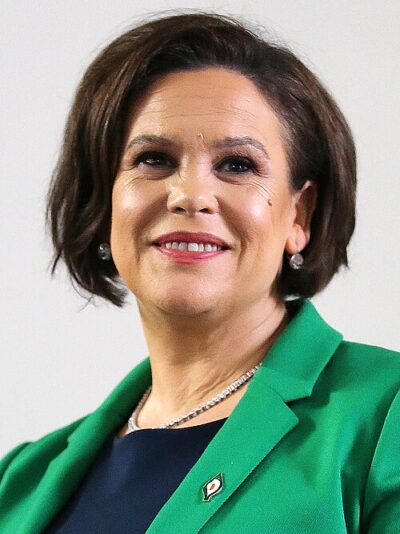
Leader of Sinn Féin
Leader of Sinn Féin is a position. It was created in 1905.
- Country
- Ireland
- Created
- November 28, 1905
All 4 facts, and where they come from
Facts
4 facts · 0 confirmed by two sources · 0 cited · 4 from one source
Where this comes from
Papalocal keeps its own record. It started from these sources; what each one said is kept here as it was copied, so a change on their side never changes this page by itself. Tap one to read its version.
What Wikidata says · copied November 17, 2026 · revision 2524084809
- Described as
- politician
- Other names
- President of Sinn Féin
- What it is
- position
- Created
- November 28, 1905 · 1 reference
- Country
- Ireland
- Official website
- http://www.sinnfein.ie/contents/20206 · 1 reference
- Wikipedias with a page
- 5
Wikidata item Q17182852 (wikidata.org/wiki/Q17182852), public domain (CC0). Copied 2026-11-17.
What Wikipedia says · copied November 17, 2026 · revision 1383744623
The president of Sinn Féin (Irish: Uachtarán Shinn Féin) is the most senior politician within the Sinn Féin political party in Ireland. Since 10 February 2018, the office has been held by Mary Lou McDonald, following the decision of Gerry Adams to stand down as leader of the party and not seek re-election again. Unlike other political parties, the president of Sinn Féin does not have the power to dismiss or appoint their deputy and to dismiss or appoint parliamentary party members to front bench positions. These decisions are taken by the Ard Chomhairle (National Executive).
If the president is not a member of Dáil Éireann, then a TD is appointed in their place to act as the leader of the parliamentary party.
The vice president of Sinn Féin is Michelle O'Neill.
From the Wikipedia article “President of Sinn Féin” (en.wikipedia.org/wiki/President_of_Sinn_Féin), by its contributors, under CC BY-SA 4.0 (creativecommons.org/licenses/by-sa/4.0/). Copied 2026-11-17; not changed.
Confirmed Two sources agree. Cited One source, and it names where it got it. One source One source, without a reference of its own. Sources disagree The sources disagree. We show the best-supported value and keep theirs below.