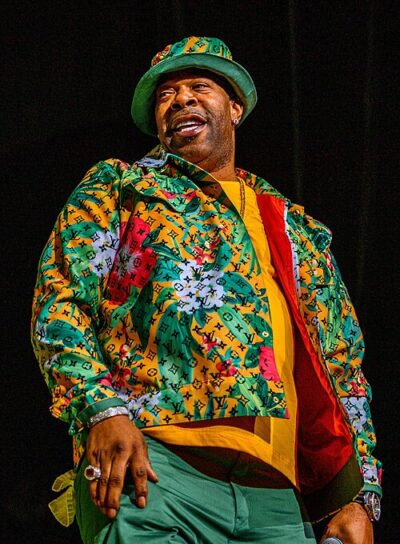
Leaders of the New School
Leaders of the New School is a musical group. It was founded in 1989.
- Founded
- 1989
- Genre
- hip-hop
- Record label
- Elektra
- Country of origin
- United States
All 5 facts, and where they come from
Facts
5 facts · 0 confirmed by two sources · 0 cited · 5 from one source
Where this comes from
Papalocal keeps its own record. It started from these sources; what each one said is kept here as it was copied, so a change on their side never changes this page by itself. Tap one to read its version.
What Wikidata says · copied November 16, 2026 · revision 2247101433
- Described as
- band
- What it is
- musical group
- Genre
- hip-hop
- Country of origin
- United States
- Record label
- Elektra
- Founded
- 1989
- Wikipedias with a page
- 7
Wikidata item Q127259 (wikidata.org/wiki/Q127259), public domain (CC0). Copied 2026-11-16.
What Wikipedia says · copied November 16, 2026 · revision 1385407279
Leaders of the New School (often abbreviated L.O.N.S.) was an American hip hop group from Long Island, New York, formed in 1984. The group consisted of Charlie Brown, Dinco D, Cut Monitor Milo, and Busta Rhymes. After being discovered by Dante Ross, the group signed with Elektra Records and was mentored by Public Enemy's production team, The Bomb Squad. Leaders of the New School was also affiliated with the Native Tongues collective, alongside acts including A Tribe Called Quest, De La Soul, and the Jungle Brothers.
The group released two studio albums, A Future Without a Past... (1991) and T.I.M.E. (The Inner Mind's Eye) (1993). Their singles included "Case of the P.T.A.", "Sobb Story", and "What's Next". In 1991, they appeared on A Tribe Called Quest's single "Scenario", which brought widespread attention to Busta Rhymes, contributing to the launch of his solo career.
Leaders of the New School disbanded in 1994 and reunited for two performances in 2012.
From the Wikipedia article “Leaders of the New School” (en.wikipedia.org/wiki/Leaders_of_the_New_School), by its contributors, under CC BY-SA 4.0 (creativecommons.org/licenses/by-sa/4.0/). Copied 2026-11-16; not changed.
Confirmed Two sources agree. Cited One source, and it names where it got it. One source One source, without a reference of its own. Sources disagree The sources disagree. We show the best-supported value and keep theirs below.