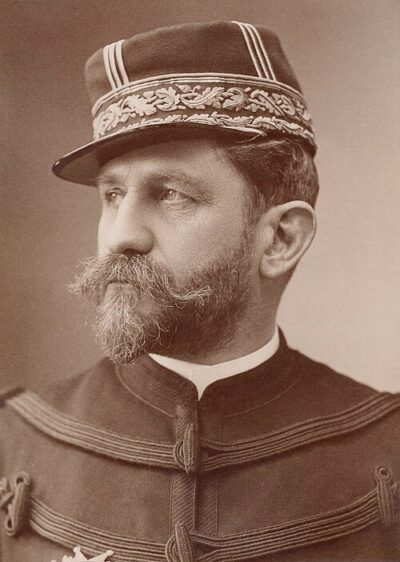
League of Patriots
The League of Patriots is a political party. It was founded in 1882 by Paul Déroulède. Its headquarters are in Paris. It stands for nationalism, militarism and xenophobia.
- Country
- France
- Founded
- May 18, 1882
- Ideology
- nationalism
- Chair
- Gaston d'Armau de Pouydraguin (1932–1939)
All 12 facts, and where they come from
Facts
12 facts · 0 confirmed by two sources · 1 cited · 11 from one source
Where this comes from
Papalocal keeps its own record. It started from these sources; what each one said is kept here as it was copied, so a change on their side never changes this page by itself. Tap one to read its version.
What Wikidata says · copied November 17, 2026 · revision 2511594313
- Described as
- political party
- Other names
- Ligue des Patriotes
- What it is
- political party
- Founded
- May 18, 1882
- Ended
- 1939 · 1 reference
- Founded by
- Paul Déroulède
- Headquarters
- Paris
- Country
- France
- Chair
- Henri Martin (1882–1883); Anatole de La Forge (1883–1885)
- Ideology
- nationalism; militarism; xenophobia; Antidreyfusism
- Wikipedias with a page
- 6
Wikidata item Q846469 (wikidata.org/wiki/Q846469), public domain (CC0). Copied 2026-11-17.
What Wikipedia says · copied November 17, 2026 · revision 1366376284
The League of Patriots (French: Ligue des Patriotes) was a French far-right league, founded in 1882 by the nationalist poet Paul Déroulède, historian Henri Martin and politician Félix Faure. The Ligue began as a non-partisan nationalist league, supported among others by writer Victor Hugo, calling for 'revanche' (revenge for the French defeat during the Franco-Prussian War) against the German Empire. One of the original purposes of the Ligue was to offer pre-military training, allowing members to participate in gymnastics and rifle shooting.
From the Wikipedia article “Ligue des Patriotes” (en.wikipedia.org/wiki/Ligue_des_Patriotes), by its contributors, under CC BY-SA 4.0 (creativecommons.org/licenses/by-sa/4.0/). Copied 2026-11-17; not changed.
Confirmed Two sources agree. Cited One source, and it names where it got it. One source One source, without a reference of its own. Sources disagree The sources disagree. We show the best-supported value and keep theirs below.
Picture: Wikimedia Commons: Papier à lettre en-tête Ligue des patriotes avec vignette.jpg · See Commons file page