Lebesgue measure
Lebesgue measure is an extension of the concept of area for an arbitrary dimension.
All 2 facts, and where they come from
Facts
2 facts · 0 confirmed by two sources · 0 cited · 2 from one source
Where this comes from
Papalocal keeps its own record. It started from these sources; what each one said is kept here as it was copied, so a change on their side never changes this page by itself. Tap one to read its version.
What Wikidata says · copied November 17, 2026 · revision 2541581871
- Described as
- extension of the concept of area for an arbitrary dimension
- Other names
- hypervolume
- What it is
- mathematical concept
- Named after
- Henri Lebesgue
- Wikipedias with a page
- 30
Wikidata item Q827230 (wikidata.org/wiki/Q827230), public domain (CC0). Copied 2026-11-17.
What Wikipedia says · copied November 17, 2026 · revision 1380514493
In mathematics, Lebesgue measure is the standard way of assigning a notion of length to subsets of the real line, area to regions of the Euclidean plane, and volume to subsets of Euclidean space in dimensions three and higher. Often denoted λ(⋅), it is used throughout mathematical analysis, especially in the definition of the Lebesgue integral and in statements that hold "almost everywhere," meaning except on a set whose Lebesgue measure is zero.
Lebesgue measure extends ordinary geometric length (or volume) in a way that is compatible with countable unions and other kinds of countable limits of sets. For example, every countable subset of the real line has Lebesgue measure zero, being a countable union of points, which have no length, while many uncountable sets also have measure zero. The measure is not defined on every subset of the real line (or Euclidean space) under the usual axioms of set theory: the sets to which it applies are called Lebesgue-measurable.
One way to characterize the Lebesgue measure is to first define it on Borel sets, that is all sets that can be obtained by countably many operations of unions, set complement, and intersections, from the collection open intervals, so that it assigns the usual length to open intervals, and satisfies natural properties under taking limits of intervals. The Lebesgue measure can then be obtained by completing this Borel measure, by assigning zero measure to all subsets of Borel sets that already have zero measure.
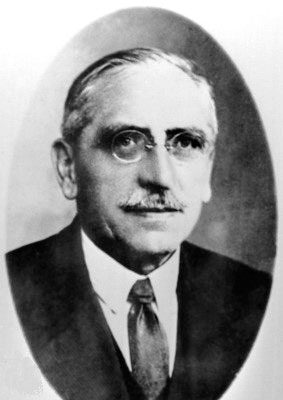
Henri Lebesgue described this measure in the year 1901 which, a year after, was followed up by his description of the Lebesgue integral. Both were published as part of his dissertation Intégrale, Longueur, Aire in 1902.
From the Wikipedia article “Lebesgue measure” (en.wikipedia.org/wiki/Lebesgue_measure), by its contributors, under CC BY-SA 4.0 (creativecommons.org/licenses/by-sa/4.0/). Copied 2026-11-17; not changed.
Confirmed Two sources agree. Cited One source, and it names where it got it. One source One source, without a reference of its own. Sources disagree The sources disagree. We show the best-supported value and keep theirs below.