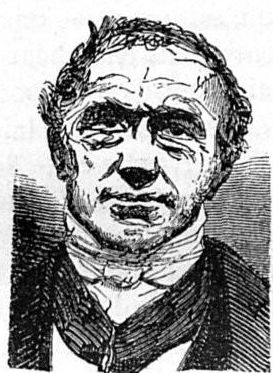
Legendre symbol
Legendre symbol is a multiplicative function with values 1, −1, 0.
All 2 facts, and where they come from
Facts
2 facts · 0 confirmed by two sources · 0 cited · 2 from one source
Where this comes from
Papalocal keeps its own record. It started from these sources; what each one said is kept here as it was copied, so a change on their side never changes this page by itself. Tap one to read its version.
What Wikidata says · copied November 17, 2026 · revision 2554299155
- Described as
- multiplicative function with values 1, −1, 0
- What it is
- multiplicative function
- Named after
- Adrien-Marie Legendre
- Wikipedias with a page
- 30
Wikidata item Q748339 (wikidata.org/wiki/Q748339), public domain (CC0). Copied 2026-11-17.
What Wikipedia says · copied November 17, 2026 · revision 1382921702
In number theory, the Legendre symbol is a function of a and p defined as
(ap)={1if a is a quadratic residue modulo p and a≢0(modp),−1if a is a quadratic nonresidue modulo p,0if a≡0(modp).
where p is an odd prime number and a is a positive integer that may or may not be a quadratic residue mod p. The Legendre symbol is a multiplicative function.
The Legendre symbol was introduced by Adrien-Marie Legendre in 1797 or 1798 in the course of his attempts at proving the law of quadratic reciprocity. Generalizations of the symbol include the Jacobi symbol and Dirichlet characters of higher order. The notational convenience of the Legendre symbol inspired introduction of several other "symbols" used in algebraic number theory, such as the Hilbert symbol and the Artin symbol.
From the Wikipedia article “Legendre symbol” (en.wikipedia.org/wiki/Legendre_symbol), by its contributors, under CC BY-SA 4.0 (creativecommons.org/licenses/by-sa/4.0/). Copied 2026-11-17; not changed.
Confirmed Two sources agree. Cited One source, and it names where it got it. One source One source, without a reference of its own. Sources disagree The sources disagree. We show the best-supported value and keep theirs below.