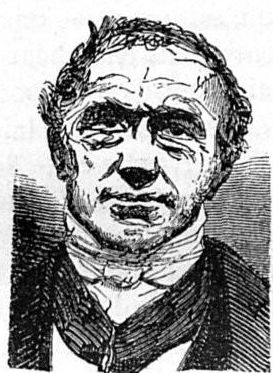
Legendre transformation
Legendre transformation is an involutive transformation on real-valued convex functions of one real variable.
All 3 facts, and where they come from
Facts
3 facts · 0 confirmed by two sources · 0 cited · 3 from one source
Where this comes from
Papalocal keeps its own record. It started from these sources; what each one said is kept here as it was copied, so a change on their side never changes this page by itself. Tap one to read its version.
What Wikidata says · copied November 17, 2026 · revision 2512254091
- Described as
- involutive transformation on real-valued convex functions of one real variable
- Other names
- Legendre transform
- What it is
- transformation; mathematical concept
- Named after
- Adrien-Marie Legendre
- Wikipedias with a page
- 24
Wikidata item Q908652 (wikidata.org/wiki/Q908652), public domain (CC0). Copied 2026-11-17.
What Wikipedia says · copied November 17, 2026 · revision 1383082732
In mathematics, the Legendre transformation (or Legendre transform), first introduced by Adrien-Marie Legendre in 1787 when studying the minimal surface problem, is an involutive transformation on real-valued functions that are convex on a real variable. Specifically, if a real-valued multivariable function is convex on one of its real independent variables, then the Legendre transform with respect to this variable is applicable to the function.
In physical problems, the Legendre transform is used to convert functions of one quantity (such as position, pressure, or temperature) into functions of the conjugate quantity (momentum, volume, and entropy, respectively). In this way, it is commonly used in classical mechanics to derive the Hamiltonian formalism out of the Lagrangian formalism (or vice versa) and in thermodynamics to derive the thermodynamic potentials, as well as in the solution of differential equations of several variables.
For sufficiently smooth functions on the real line, the Legendre transform f∗ of a function f can be specified, up to an additive constant, by the condition that the functions' first derivatives are inverse functions of each other. This can be expressed as
dfdx=(df∗dx)−1 in Leibniz's notation.
The generalization of the Legendre transformation to affine spaces and non-convex functions is known as the convex conjugate (also called the Legendre–Fenchel transformation), which can be used to construct a function's convex hull.
From the Wikipedia article “Legendre transformation” (en.wikipedia.org/wiki/Legendre_transformation), by its contributors, under CC BY-SA 4.0 (creativecommons.org/licenses/by-sa/4.0/). Copied 2026-11-17; not changed.
Confirmed Two sources agree. Cited One source, and it names where it got it. One source One source, without a reference of its own. Sources disagree The sources disagree. We show the best-supported value and keep theirs below.
Picture: Wikimedia Commons: Legendre a.png · See Commons file page