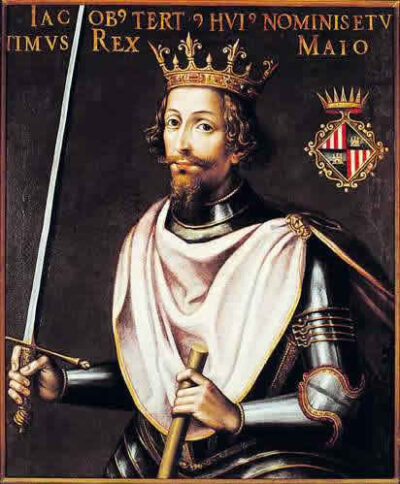
Leges palatinae
Leges palatinae is a Laws of the Kingdom of Majorca. It came out in 1337.
- Released
- May 9, 1337
All 4 facts, and where they come from
Facts
4 facts · 0 confirmed by two sources · 0 cited · 4 from one source
Where this comes from
Papalocal keeps its own record. It started from these sources; what each one said is kept here as it was copied, so a change on their side never changes this page by itself. Tap one to read its version.
What Wikidata says · copied November 18, 2026 · revision 2569658136
- Described as
- Laws of the Kingdom of Majorca
- What it is
- legislation
- Released
- May 9, 1337
- Country
- Kingdom of Majorca
- Office of
- Crown of Majorca
- Wikipedias with a page
- 3
Wikidata item Q3258692 (wikidata.org/wiki/Q3258692), public domain (CC0). Copied 2026-11-18.
What Wikipedia says · copied November 18, 2026 · revision 1351723345
The Leges palatinae ("Palatine Laws") were the laws governing the functioning of the royal court of the Kingdom of Majorca, promulgated by James III at Palma on 9 May 1337. The Leges were probably conceived to lend weight to James's position as an independent king. The Leges are preserved in an illuminated manuscript with colourful images by an Italian artist of the court officers about their duties. The Leges were translated from Latin and revised as the Catalan Ordenacions de cort by Peter IV of Aragon, after he conquered Majorca, in 1344.
The original manuscript was brought with James III to France when he fled Peter's invasion. He there gave it to King Philip VI. It was later given to Philip the Bold and ended up in the Bibliothèque Royale in Brussels. A facsimile edition by Joan Domenge i Mesquida, with an introduction in English describing the artistic value of the manuscript, was published by Indiana University Press in 1994.
The Leges are divided into seven sections and are "the most elaborate set of ordinances to survive from this period". Much of the text is spent explaining the roles of the four great officers of state: the majordomo (or maître d'hôtel), great chamberlain (or camerlingue), the chancellor, and the maestre racional (also maître des comptes or maître rational). The lesser officers included the butler, marshal, and constable. The majordomo was in charge of maintaining court protocols and oversaw the king's table, much like the later grand maître d'hôtel in Valois Duchy of Burgundy. The chancellor, the vice-chancellor, and the scribes of the chancery were accorded the right to issue documents pertinent to their offices without the prior permission of the king. The subsection De mimis et joculatoribus ("On actors and entertainers") prescribes two trumpeters, a drummer, and two other performers permanently at court. They played when the king arrived at dinner, when he left the table, and at the end of the meal; an early version of Tafelmusik.
From the Wikipedia article “Leges palatinae” (en.wikipedia.org/wiki/Leges_palatinae), by its contributors, under CC BY-SA 4.0 (creativecommons.org/licenses/by-sa/4.0/). Copied 2026-11-18; not changed.
Confirmed Two sources agree. Cited One source, and it names where it got it. One source One source, without a reference of its own. Sources disagree The sources disagree. We show the best-supported value and keep theirs below.
Picture: Wikimedia Commons: Leges Palatinae Iacobi III Regis Maioricarum.jpg · See Commons file page