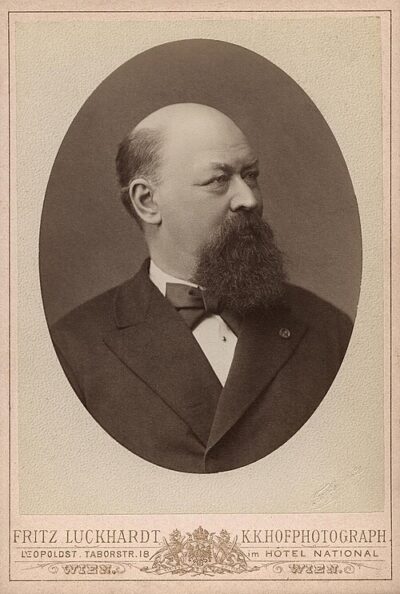
Leichte Kavallerie
Leichte Kavallerie is an operetta by Franz von Suppé.
- Released
- 19th century
All 3 facts, and where they come from
Facts
3 facts · 0 confirmed by two sources · 0 cited · 3 from one source
Where this comes from
Papalocal keeps its own record. It started from these sources; what each one said is kept here as it was copied, so a change on their side never changes this page by itself. Tap one to read its version.
What Wikidata says · copied November 17, 2026 · revision 2425232385
- Described as
- operetta by Franz von Suppé
- What it is
- dramatico-musical work
- Music by
- Franz von Suppè
- Released
- 19th century
- Wikipedias with a page
- 14
Wikidata item Q1814636 (wikidata.org/wiki/Q1814636), public domain (CC0). Copied 2026-11-17.
What Wikipedia says · copied November 17, 2026 · revision 1318610863
Leichte Kavallerie (Light Cavalry) is an operetta in two acts by Franz von Suppé, with a libretto by Karl Costa. It was first performed in the Carltheater, Vienna, on 21 March 1866.
The original work is set in a 19th-century Austrian village where several love intrigues and the discovery of a father-daughter relationship are accompanied by the arrival of a regiment of hussars. In 1934, Hans Bodenstedt completely rewrote the operetta. It was set in the 18th century amid the court intrigues of a Baron and his Hungarian Countess lover, whose ballet company is referred to as the "light cavalry".
While much of the operetta remains in relative obscurity, the Light Cavalry Overture is one of Suppé's best known works. The music from the operetta was used as the soundtrack of a film of the same name in 1935.
From the Wikipedia article “Leichte Kavallerie” (en.wikipedia.org/wiki/Leichte_Kavallerie), by its contributors, under CC BY-SA 4.0 (creativecommons.org/licenses/by-sa/4.0/). Copied 2026-11-17; not changed.
Confirmed Two sources agree. Cited One source, and it names where it got it. One source One source, without a reference of its own. Sources disagree The sources disagree. We show the best-supported value and keep theirs below.