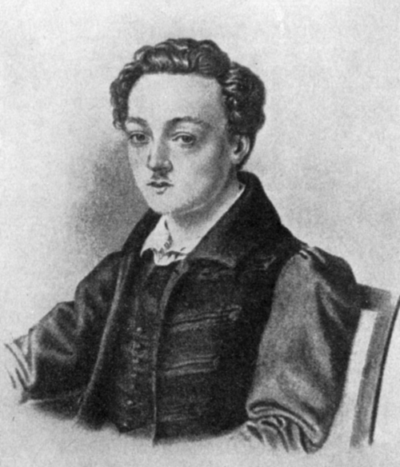
Leonce and Lena
Leonce and Lena is a 1836 play written by Georg Büchner. It is based on Ponce de Leon.
- Published
- 1836
- Came out
- 1836
- Written by
- Georg Büchner
- Genre
- Lustspiel
All 9 facts, and where they come from
Facts
9 facts · 0 confirmed by two sources · 0 cited · 9 from one source
Where this comes from
Papalocal keeps its own record. It started from these sources; what each one said is kept here as it was copied, so a change on their side never changes this page by itself. Tap one to read its version.
What Wikidata says · copied November 17, 2026 · revision 2555882765
- Described as
- 1836 play written by Georg Büchner
- What it is
- literary work
- Written by
- Georg Büchner
- Genre
- Lustspiel; drama fiction
- Published
- 1836; 1838; 1842
- Language
- German
- Based on
- Ponce de Leon
- Comes after
- Fantasio
- Came out
- 1836
- Wikipedias with a page
- 8
Wikidata item Q1751800 (wikidata.org/wiki/Q1751800), public domain (CC0). Copied 2026-11-17.
What Wikipedia says · copied November 17, 2026 · revision 1386194242
Leonce and Lena (German: Leonce und Lena) is a play by German dramatist Georg Büchner (1813–1837); while considered a comedy, it is a satire veiled in humor. Written in the spring of 1836 for a competition 'for the best one- or two-act comedy in prose or verse' sponsored by Stuttgart publisher Cotta. However, Büchner missed the submission deadline and the play was returned unread. It was first performed almost 60 years later, on May 31, 1895, in an outdoor performance by the Munich Company Intimes Theater, directed by Ernst von Wolzogen and with the involvement of Max Halbe and Oskar Panizza, illustrating the fact that Büchner only gained prominence as a writer in the 20th century.
Erich Kästner considered Leonce and Lena to be one of the six most important classic comedies in German language.
From the Wikipedia article “Leonce and Lena” (en.wikipedia.org/wiki/Leonce_and_Lena), by its contributors, under CC BY-SA 4.0 (creativecommons.org/licenses/by-sa/4.0/). Copied 2026-11-17; not changed.
Confirmed Two sources agree. Cited One source, and it names where it got it. One source One source, without a reference of its own. Sources disagree The sources disagree. We show the best-supported value and keep theirs below.