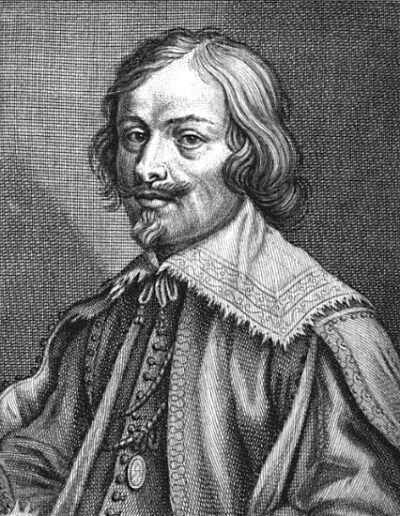
Les Grandes Misères de la guerre
Les Grandes Misères de la guerre is a 1633 series of etchings by French engraver Jacques Callot depicting the Thirty Years' War.
- Released
- 1633
- Came out
- 1633
- Created by
- Jacques Callot
All 6 facts, and where they come from
Facts
6 facts · 0 confirmed by two sources · 0 cited · 6 from one source
Where this comes from
Papalocal keeps its own record. It started from these sources; what each one said is kept here as it was copied, so a change on their side never changes this page by itself. Tap one to read its version.
What Wikidata says · copied November 17, 2026 · revision 2565835045
- Described as
- 1633 series of etchings by French engraver Jacques Callot depicting the Thirty Years' War
- Other names
- Les Misères et les Malheurs de la Guerre, Les Grandes Miseres de la guerre, Les Miseres et les Malheurs de la Guerre, The miseries and woes of war
- What it is
- series of prints; etching print
- Created by
- Jacques Callot · 1 reference
- Released
- 1633
- Came out
- 1633
- Owned by
- Art Gallery of New South Wales (1963–)
- Wikipedias with a page
- 10
Wikidata item Q3233043 (wikidata.org/wiki/Q3233043), public domain (CC0). Copied 2026-11-17.
What Wikipedia says · copied November 17, 2026 · revision 1380937702
Les Grandes Misères de la guerre (French: [lɛ ɡʁɑ̃d mizɛʁ də la ɡɛʁ]; English: The Great Miseries of War or The Miseries and Misfortunes of War) are a series of 18 etchings by Lorrainian artist Jacques Callot (1592–1635), titled in full Les Misères et les Malheurs de la Guerre. Despite the grand theme of the series, the images are in fact only about 83 mm × 180 mm (3.25 x 7 inches) each, and are called the "large" Miseries to distinguish them from an even smaller earlier set on the same subject. Published in 1633, the series is Callot's best-known work and has been called the first "anti-war statement" in European art.
The images are panoramic views with many small figures, and they feature gradation from light to dark that was typical of Callot's etchings.
In sequence, the images recount the story of soldiers as they enroll in an army, fight in a battle, and rampage through the civilian community, only to then be arrested and executed.
The etchings can also be considered as an early prototypical French comic strip, within the text comics genre, since the illustrations are accompanied by a descriptive text beneath the images.
From the Wikipedia article “Les Grandes Misères de la guerre” (en.wikipedia.org/wiki/Les_Grandes_Misères_de_la_guerre), by its contributors, under CC BY-SA 4.0 (creativecommons.org/licenses/by-sa/4.0/). Copied 2026-11-17; not changed.
Confirmed Two sources agree. Cited One source, and it names where it got it. One source One source, without a reference of its own. Sources disagree The sources disagree. We show the best-supported value and keep theirs below.
Picture: Wikimedia Commons: Hanging from The Miseries and Misfortunes of War by Jacques Callot.jpg · See Commons file page