Lexell's Comet
Lexell's Comet is a comet; near-Earth object.
All 3 facts, and where they come from
Facts
3 facts · 0 confirmed by two sources · 3 cited · 0 from one source
Where this comes from
Papalocal keeps its own record. It started from these sources; what each one said is kept here as it was copied, so a change on their side never changes this page by itself. Tap one to read its version.
What Wikidata says · copied November 17, 2026 · revision 2530289960
- Described as
- comet; near-Earth object
- Other names
- Comet Lexell, D/1770 L1, P/Lexell, D/1770 L1 (Lexell)
- What it is
- periodic comet · 1 reference; Jupiter-family comet · 1 reference; near-Earth object · 1 reference
- Wikipedias with a page
- 15
Wikidata item Q2466807 (wikidata.org/wiki/Q2466807), public domain (CC0). Copied 2026-11-17.
What Wikipedia says · copied November 17, 2026 · revision 1376298985
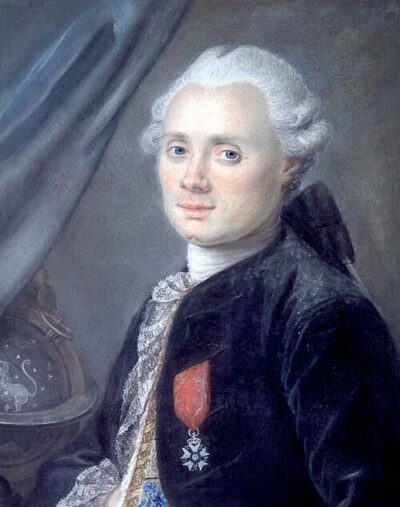
D/1770 L1, popularly known as Lexell's Comet after its orbit computer Anders Johan Lexell, was a comet discovered by astronomer Charles Messier in June 1770. It is notable for having passed closer to Earth than any other comet in recorded history, approaching to a distance of only 0.015 astronomical units (2,200,000 km; 1,400,000 mi), or six times the distance from the Earth to the Moon. The comet is lost, having not been seen since 1770.
The passing of Lexell's Comet in 1770 holds the record for the closest observed approach to Earth by a comet. However, orbital calculations suggest it may have been beaten by a small sungrazing comet, P/1999 J6 (SOHO), which may have passed at about 0.012 AU (1,800,000 km; 1,100,000 mi) from Earth on June 12, 1999, but the uncertainties are around ±1.5 million km as the P/1999 J6 approach was unobserved.
From the Wikipedia article “Lexell's Comet” (en.wikipedia.org/wiki/Lexell's_Comet), by its contributors, under CC BY-SA 4.0 (creativecommons.org/licenses/by-sa/4.0/). Copied 2026-11-17; not changed.
Confirmed Two sources agree. Cited One source, and it names where it got it. One source One source, without a reference of its own. Sources disagree The sources disagree. We show the best-supported value and keep theirs below.