Lexis ratio
Lexis ratio is a ratio used in statistics where the outcome has or is two valued.
All 2 facts, and where they come from
Facts
2 facts · 0 confirmed by two sources · 0 cited · 2 from one source
Where this comes from
Papalocal keeps its own record. It started from these sources; what each one said is kept here as it was copied, so a change on their side never changes this page by itself. Tap one to read its version.
What Wikidata says · copied November 19, 2026 · revision 2432102510
- Described as
- ratio used in statistics where the outcome has or is two valued
- What it is
- mathematical concept
- Named after
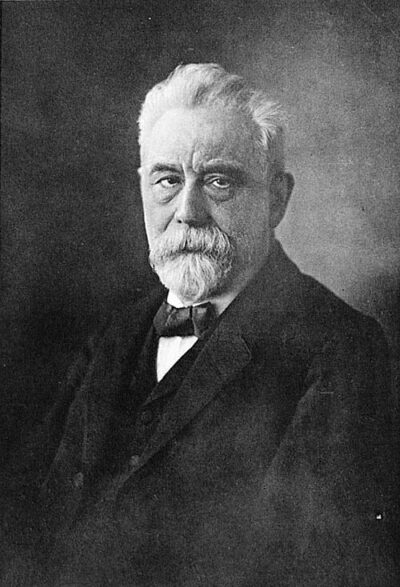
- Wilhelm Lexis
- Wikipedias with a page
- 1
Wikidata item Q6537895 (wikidata.org/wiki/Q6537895), public domain (CC0). Copied 2026-11-19.
What Wikipedia says · copied November 19, 2026 · revision 1269780222
The Lexis ratio is used in statistics as a measure which seeks to evaluate differences between the statistical properties of random mechanisms where the outcome is two-valued — for example "success" or "failure", "win" or "lose". The idea is that the probability of success might vary between different sets of trials in different situations. This ratio is not much used currently having been largely replaced by the use of the chi-squared test in testing for the homogeneity of samples.
This measure compares the between-set variance of the sample proportions (evaluated for each set) with what the variance should be if there were no difference between in the true proportions of success across the different sets. Thus the measure is used to evaluate how data compares to a fixed-probability-of-success Bernoulli distribution. The term "Lexis ratio" is sometimes referred to as L or Q, whereL
2
=
Q
2
=
s
2
σ
0
2
.
{\displaystyle L^{2}=Q^{2}={\frac {s^{2}}{\sigma _{0}^{2}}}.}
Where
s
2
{\displaystyle s^{2}}
is the (weighted) sample variance derived from the observed proportions of success in sets in "Lexis trials" and
σ
0
2
{\displaystyle \sigma _{0}^{2}}
is the variance computed from the expected Bernoulli distribution on the basis of the overall average proportion of success. Trials where L falls significantly above or below 1 are known as supernormal and subnormal, respectively.
This ratio ( Q ) is a measure that can be used to distinguish between three types of variation in sampling for attributes: Bernoullian, Lexian and Poissonian. The Lexis ratio is sometimes also referred to as L.
From the Wikipedia article “Lexis ratio” (en.wikipedia.org/wiki/Lexis_ratio), by its contributors, under CC BY-SA 4.0 (creativecommons.org/licenses/by-sa/4.0/). Copied 2026-11-19; not changed.
Confirmed Two sources agree. Cited One source, and it names where it got it. One source One source, without a reference of its own. Sources disagree The sources disagree. We show the best-supported value and keep theirs below.