
Liberal Party
The Liberal Party is a Norwegian political party. It was founded in 1884. Its headquarters are in Venstres Hus. It stands for social liberalism, green liberalism and Pirate Party.
- Country
- Norway
- Founded
- January 28, 1884
- Ideology
- social liberalism
- Chair
- Guri Melby (2020–)
All 10 facts, and where they come from
Facts
10 facts · 0 confirmed by two sources · 2 cited · 8 from one source
Where this comes from
Papalocal keeps its own record. It started from these sources; what each one said is kept here as it was copied, so a change on their side never changes this page by itself. Tap one to read its version.
What Wikidata says · copied November 17, 2026 · revision 2562714944
- Described as
- Norwegian political party
- Other names
- Venstre
- What it is
- political party
- Founded
- January 28, 1884
- Headquarters
- Venstres Hus
- Country
- Norway
- Chair
- Guri Melby (2020–); Trine Skei Grande (2010–2020)
- Ideology
- social liberalism; green liberalism · 1 reference; Pirate Party (2007–) · 1 reference
- Official website
- https://venstre.no (1998–)
- Wikipedias with a page
- 38
Wikidata item Q500190 (wikidata.org/wiki/Q500190), public domain (CC0). Copied 2026-11-17.
What Wikipedia says · copied November 17, 2026 · revision 1382024145
The Liberal Party (Norwegian: Venstre, lit. 'Left', V; Northern Sami: Gurutbellodat) is a social liberal political party in Norway. It was founded in 1884 and is the oldest political party in Norway. The Liberal Party is positioned on the centre to centre-right of the political spectrum. It is a liberal party which has over time enacted reforms such as parliamentarism, freedom of religion, universal suffrage, and state schooling.
For most of the late 19th and early 20th century, it was Norway's largest and most dominant political party. Later, in the postwar era it lost most of its support and became a smaller party. The party has nevertheless participated in several centrist and centre-right government coalitions in the postwar era and it is aligned with the country's centre-right bloc alongside the Conservative Party, Christian Democratic Party and the Progress Party. Guri Melby has served as the party leader since 2020.
The party was founded in 1884. With support mainly from farmers and progressive members of the bourgeoisie, it was the first political party that came into existence in Norway, and was the dominant governmental party for several decades. It has always had a close relationship with the Norwegian Association for Women's Rights, which was founded in the same year by prominent Liberal Party politicians. The party has played a central role in advocating for women's suffrage in Norway. Since the 1880s the party has seen many internal schisms. A politically moderate and religious wing broke away in 1888 to form the Moderate Liberal Party and the conservative-liberal faction, including the former Prime Minister of Norway Christian Michelsen who broke away in 1909 to form the Free-minded Liberal Party (both parties eventually merged into the Conservative Party). The most notable recent schism was in 1972 when the Liberal Party decided to oppose Norwegian membership in the European Economic Community (EEC). The faction supporting membership broke away and formed the Liberal People's Party. The party has since endorsed Norwegian membership in the EU and is currently a strong proponent.
From the Wikipedia article “Liberal Party (Norway)” (en.wikipedia.org/wiki/Liberal_Party_(Norway)), by its contributors, under CC BY-SA 4.0 (creativecommons.org/licenses/by-sa/4.0/). Copied 2026-11-17; not changed.
Confirmed Two sources agree. Cited One source, and it names where it got it. One source One source, without a reference of its own. Sources disagree The sources disagree. We show the best-supported value and keep theirs below.
People connected 6
Party members
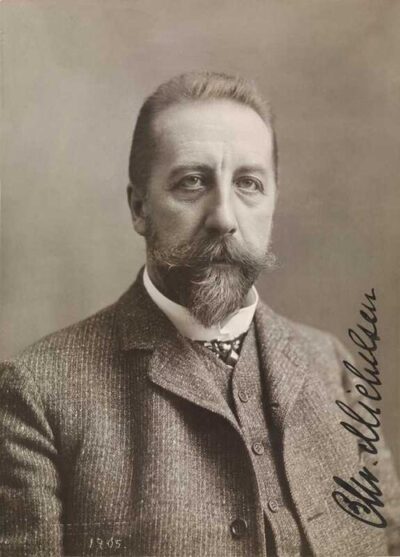 Christian Michelsen (1884–1903)9th Prime Minister of Norway
 Kristen Nygaard (–1971)Computer scientist, Mathematician (1926-2002)
 Johan Ludwig Mowinckel16th Prime Minister of Norway (1870–1943)
 Gunnar Knudsen11th Prime Minister of Norway (1848–1928)
 FenrizNorwegian musician
 Jørgen Løvland10th Prime Minister of Norway (1848–1922)
