
Liberty Korea Party
The Liberty Korea Party is a 1997–2020 political party in South Korea. Its headquarters are in Seoul. It stands for national conservatism, economic liberalism and anti-communism.
- Country
- South Korea
- Founded
- November 21, 1997
- Ideology
- national conservatism
- Chair
- Kim Hee-ok (2016–)
All 12 facts, and where they come from
Facts
12 facts · 0 confirmed by two sources · 2 cited · 10 from one source
Where this comes from
Papalocal keeps its own record. It started from these sources; what each one said is kept here as it was copied, so a change on their side never changes this page by itself. Tap one to read its version.
What Wikidata says · copied November 17, 2026 · revision 2559655366
- Described as
- 1997–2020 political party in South Korea
- Other names
- Saenuri Party, New Frontier Party, Grand National Party, Free Korea Party, Hannara Party
- What it is
- political party
- Founded
- November 21, 1997
- Ended
- February 17, 2020
- Headquarters
- Seoul
- Country
- South Korea
- Chair
- Kim Moo-sung (2014–2016); Hwang Woo-yea (2012–2014)
- Ideology
- national conservatism; economic liberalism; anti-communism · 1 reference; right-wing populism · 1 reference
- Official website
- http://www.libertykoreaparty.kr
- Wikipedias with a page
- 31
Wikidata item Q20916 (wikidata.org/wiki/Q20916), public domain (CC0). Copied 2026-11-17.
What Wikipedia says · copied November 17, 2026 · revision 1385575811
The Liberty Korea Party (Korean: 자유한국당) was a conservative political party in South Korea that was described in multiple various ways as right-wing, right-wing populist, or far-right.
The Grand National Party party was founded in 1997, when the United Democratic Party and New Korea Party merged. In 1997, GNP presidential candidate Lee Hoi-chang lost to National Congress for New Politics candidate Kim Dae-jung, marking the first time in Korea the ruling party peacefully transferred power to the opposition party. In 2004, the party lost its leading status in the National Assembly. In 2007, GNP candidate Lee Myung-bak was elected the president, returning the party into power. In 2008, it recaptured its majority in the National Assembly.
In 2012, it was renamed to the Saenuri Party. That year, its candidate Park Geun-hye won in the presidential election, while the party retained its majority in the National Assembly. In 2016, Park was impeached by the National Assembly due to the 2016 South Korean political scandal, while some party members split and created the Bareun Party, leading the party to lose its plurality in the National Assembly. In 2017, the party was renamed to the Liberty Korea Party. In February 2020, the Liberty Korea Party was succeeded by the United Future Party when it merged with Onward for Future 4.0 and the New Conservative Party to contest the 2020 South Korean legislative election.
The party was generally seen as right-wing, conservative and economically liberal. It espoused socially conservative views. It favored strengthening South Korea's alliance with the United States, as well as improving relations with Japan. The party also took a hawkish stance towards North Korea.
From the Wikipedia article “Liberty Korea Party” (en.wikipedia.org/wiki/Liberty_Korea_Party), by its contributors, under CC BY-SA 4.0 (creativecommons.org/licenses/by-sa/4.0/). Copied 2026-11-17; not changed.
Confirmed Two sources agree. Cited One source, and it names where it got it. One source One source, without a reference of its own. Sources disagree The sources disagree. We show the best-supported value and keep theirs below.
People connected 6
Party members
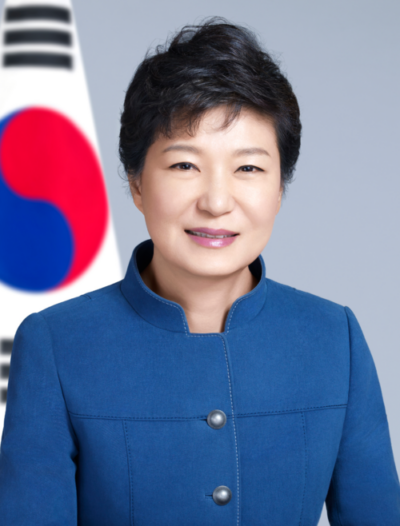 Park Geun-hye (1997–2017)President of South Korea from 2013 to 2017
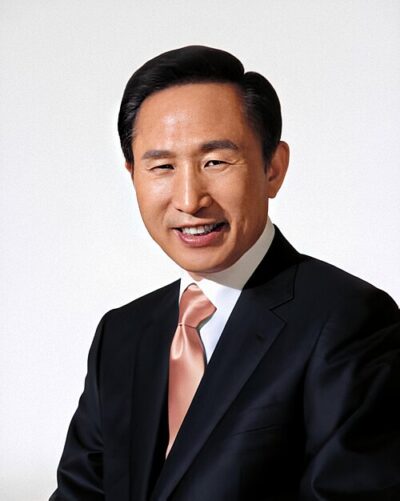 Lee Myung-bakPresident of South Korea from 2008 to 2013
- HHwang Kyo-ahn (2018–2020)acting president of South Korea from 2016 to 2017 (born 1957)
 Han Seung-sooSouth Korean politician and diplomat.; former Minister of Foreign Affairs and Trade
 Jung Hong-wonSouth Korean politician
 Kim Jong-pil (2006–)South Korean politician (1926–2018)
